Best Mid-Century Lighting: How to Choose for Your Space
Mid-century modern is back — not as a passing revival, but as a durable design…

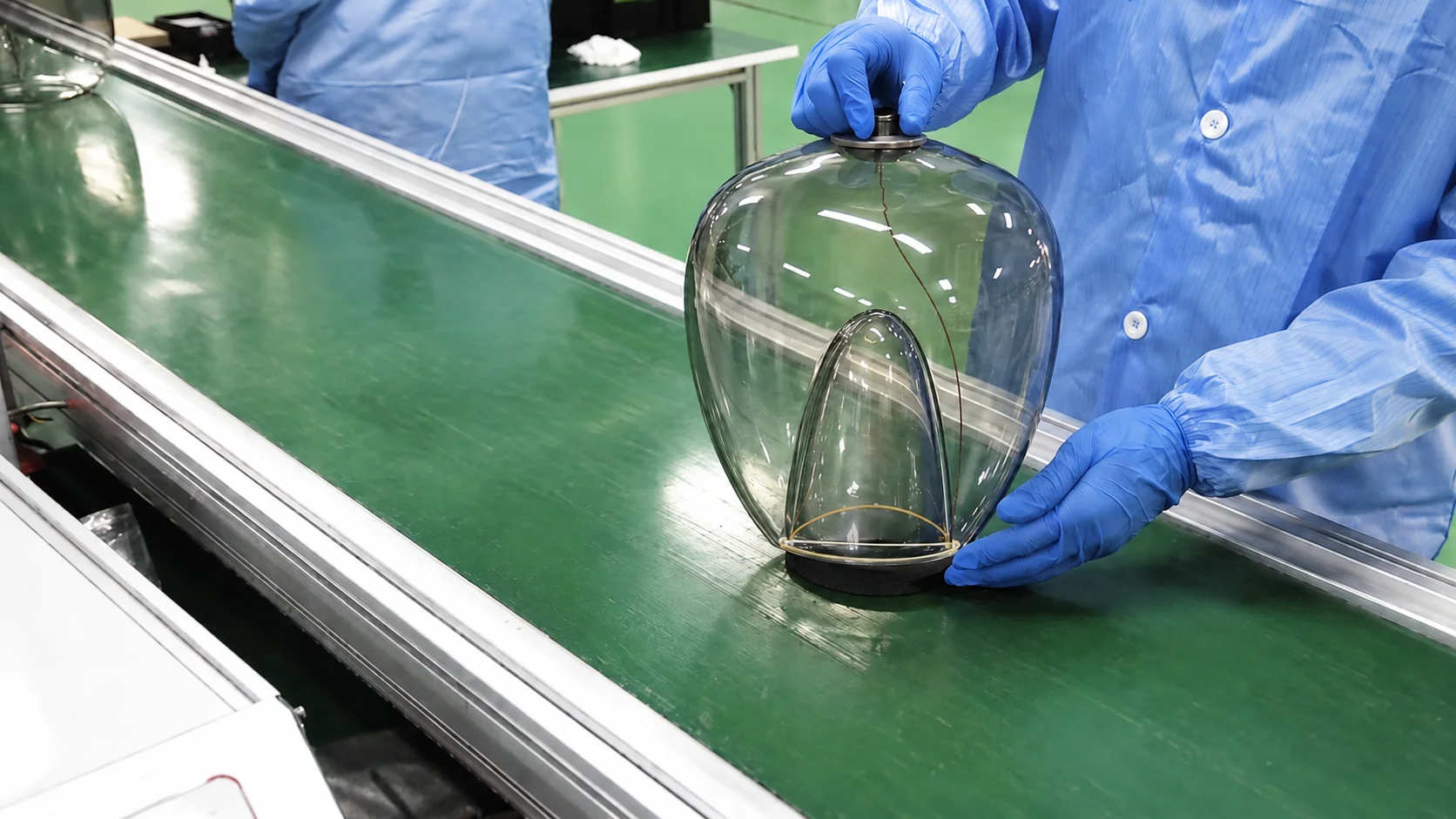
A buyer sends the same reference to three factories and gets three prices that do not sit close together. The usual reading is that one is gouging and another is cutting corners. Neither is generally true: the gap comes from decisions taken long before the quote was written, in places a product image never shows.
A unit price is material, labour steps, tooling divided across the order, finishing passes, packaging, testing and certification spread over the run, plus margin. Two lamps with the same silhouette diverge in at least one of those lines. Comparing quotes without comparing the lines means comparing arithmetic that was never equivalent.
Two questions arrive in the same inbox: what a program costs per unit, and what it costs to stand up production at all — the second being what buyers usually mean by plant cost.
A new mould or glass former is a fixed cost. Divided across 300 pieces it carries real weight in the unit price; divided across 3,000 it nearly disappears. This line explains most of the gap between quotes that look unreasonable and quotes that look suspiciously cheap: neither is wrong, they were priced at different volumes.
A second size, or a colourway that cannot run on the same tooling, restarts that amortisation from zero. This is why a four-SKU family is viable at a volume where four unrelated designs are not. Ask early whether tooling is quoted separately or buried in the unit price, and who owns it after the order.
Two shades with the same profile can differ in wall thickness, and that difference travels through the whole cost chain. Thicker glass needs a longer annealing step, weighs more, shifts the carton specification and changes the transit breakage rate. Thinner glass is cheaper per piece and more expensive per delivered lamp, because the saving is repaid in packaging and replacements. On metal, sheet gauge and the forming method set tooling cost and labour time.
Plating, lacquer, powder coat and antiquing each add handling, racking, rejects and rework. A two-pass finish is not a slightly dearer version of a one-pass finish; it is a different production route with its own yield. Where a finish must match across metal, glass and a wrapped shade, an extra colour-approval step appears that buyers rarely see quoted but always pay for. The durability side is covered in our note on finish fade in manufacturing.
For decorative lamps we work at 300 to 500 pieces, with first orders commonly starting at 300. Below that, setup and tooling amortisation dominate and the quote stops being informative; above it, material purchasing improves and the curve flattens. The practical consequence: quantity per colour matters more than total quantity — three colours at 100 each cost more than one at 300, because setup repeats while tooling does not.
A 120V build on E26 with UL or ETL, and a 220–240V build on E27 with CE, are separate pieces of evidence, not a label swap. Each voltage variant carries its own approval cost, spread across the volume that variant will actually sell. A buyer entering both North America and Europe should price that split early: on small runs the second approval can outweigh the material saving that prompted the plan.
That last point changes outcomes. Once the spec is written down — material, thickness, finish system, voltage, CCT tolerance within ±100K, carton performance — quotes become comparable and the cheapest one stops being the best value by default. Our seven checks for evaluating a decorative lighting OEM covers how to read the answers.
Send the landed target with the quantity and channel, and the work becomes a question of where the cost sits rather than whether the price is possible. Sometimes the answer is a smaller run at a higher unit cost; sometimes one colour instead of three — both beat a quote that quietly removes the margin from the hinge. Our decorative lighting manufacturing and OEM and ODM pages set out what is standard in a build; the private label program covers how a collection is developed from a reference.
If you are testing whether a design is viable before committing a range, a Cup Cake pendant or a Vase portable lamp shows how tooling is shared across a family; table lamps and floor lamps cover those formats.
To put a live price against a real specification, send us the brief — quantity, channel and target price are enough.