Best Mid-Century Lighting: How to Choose for Your Space
Mid-century modern is back — not as a passing revival, but as a durable design…


If you’ve ever sourced lighting from overseas, this story probably sounds familiar.
Samples arrive fast. They’re flawless. Brightness is spot on, color temperature is dialed in, the finish looks premium. You place a $50,000 purchase order, confident you’ve found the right partner.
Then production lands. Light output is 8% lower. A handful of units flicker. The aluminum housing feels cheaper than what you approved. Suddenly you’re staring at a warehouse full of inventory you can’t confidently ship — and a client who wants answers.
This pattern has a name: Quality Fade — the gap between what a supplier demonstrates in a hand-built sample and what they deliver when the order hits the production floor at volume. It’s one of the most expensive problems in the lighting supply chain, and it almost always catches buyers by surprise.
Here‘s why it happens — and how to stop it before it costs you.
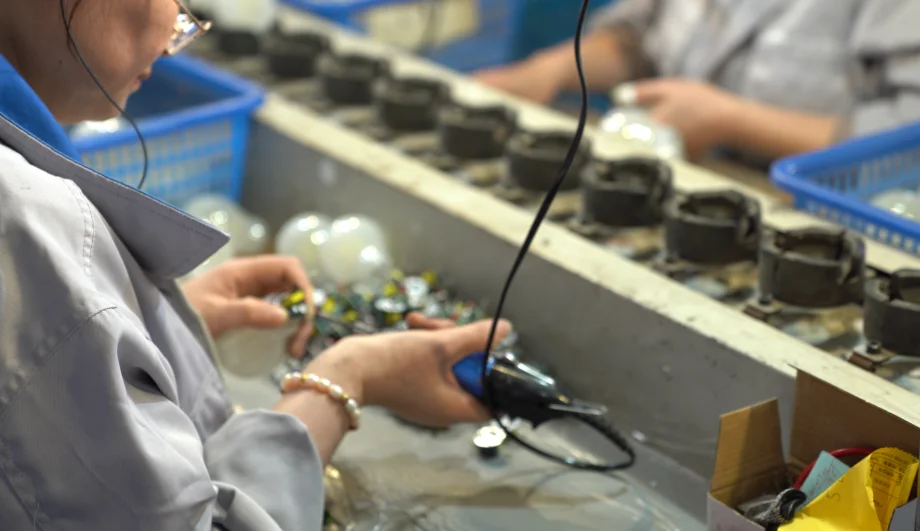
When your supplier prepares samples, a senior engineer hand-picks every LED chip, fine-tunes the reflow profile for that specific batch, and the assembly team works at a careful, unhurried pace. It’s essentially a laboratory exercise.
In mass production, the same product goes to line workers running at speed. Components come from mixed bulk inventory instead of hand-selected stock. The SMT machine runs its default profile. A spot-check inspector sees one unit in fifty.
The engineering team has the talent. The production line lacks the controls to replicate that talent at scale.
Between quotation and production, raw material prices shift. The factory’s margin tightens. Rather than renegotiate with you, they substitute. The LED chips downgrade from a Tier 1 brand to a “comparable” alternative. PCB copper weight drops. Thermal paste changes from Japanese to locally sourced.
Each substitution seems minor in isolation. Combined, they quietly degrade thermal performance, brightness consistency, and product lifespan — and the buyer never hears about any of it.
Red flag: A supplier who quotes significantly below competitors without explaining how, or who’s reluctant to lock an Approved Vendor List (AVL) into the contract.
Making 50 perfect units with tribal knowledge is easy. The veteran technician “just knows” the right temperature. The QC supervisor “can tell by looking” whether a unit is good. That works beautifully for samples.
Making 5,000 units that way? It falls apart.
Production-grade manufacturers operate on documented work instructions, calibrated equipment, defined inspection checkpoints, and Statistical Process Control (SPC) data. If a supplier can’t show you these — or looks confused when you ask — they might make a great sample, but they won’t make a great production run.
A lighting fixture isn’t one component. It’s LEDs, drivers, heat sinks, optics, housings, connectors — each with its own supply chain.
For 50 samples, you buy from one verified lot. For 10,000 units, you’re pulling components across multiple lots and sometimes multiple manufacturers. One driver lot has slightly different output current than another. One LED batch runs a touch warmer. Individually, each falls within spec. Stacked across 10,000 units, the accumulated variance becomes visible — and customers notice.
Managing component consistency at volume is a capability in itself, and many factories simply haven’t built it.
ISO 9001. CE. RoHS. UL. Every factory has a wall of them.
But a certificate proves the factory passed an audit — a scheduled, prepared-for event. It doesn’t prove the quality system is practiced daily when nobody’s watching. Many factories prepare for audits the same way they prepare samples: with extra care that vanishes the moment the auditor leaves.
Instead of asking “Do you have ISO 9001?”, ask: “Show me the quality data from your last three production runs of a product similar to mine.” Capable suppliers answer immediately. The rest deflect.
Test the sample rigorously — brightness uniformity, thermal performance under continuous operation, mechanical durability. Then request a second sample from a different production batch. If performance varies between units, the supplier lacks process stability. One good unit is luck. Two tells you something.
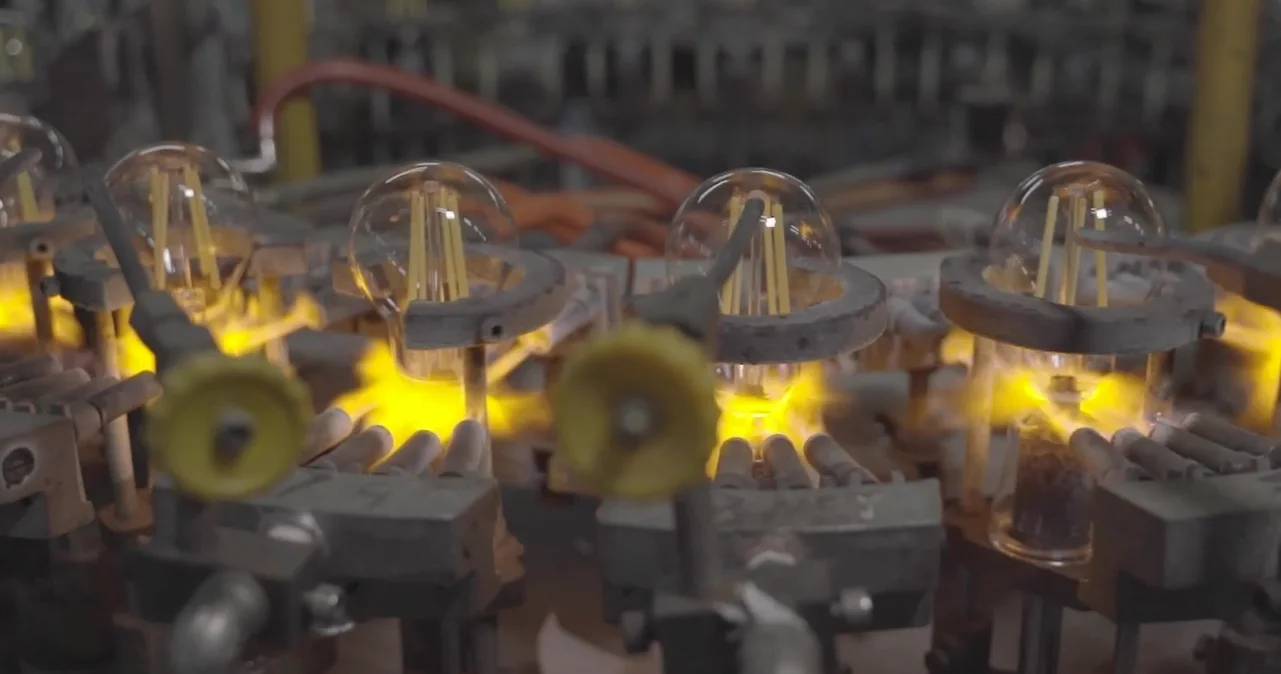
Every factory has a clean, impressive showroom. Spend five minutes there. Then spend two hours on the production floor. Are work instructions posted at each station? Is the SMT line running documented, locked parameters? Are inspection stations actually staffed? The floor tells you more in an hour than the showroom tells you in a week.
Before the main order, run 50–200 units using actual production tooling, materials, and line workers — not engineers. Test brightness and color temperature consistency across at least 20 units. This is where hidden problems surface, and it’s far cheaper to find them here than after the container ships.
Freeze the BOM in your purchase contract — every component specified by brand, model number, and spec. Add a clause: no substitution without written approval. A supplier who pushes back on this is signaling exactly how they plan to manage costs.
The most common buyer mistake: placing the order, then going quiet. Schedule in-process inspections at 20–30% and 70–80% completion. Request mid-run samples pulled from the line, not specially prepared. Require documented pre-shipment inspection against your approved sample. A supplier who knows you’re watching produces differently.
A flawless sample proves the engineering team is good. A consistent production run proves the factory is capable. You need to verify the second before you trust the first.
Suppliers who deliver at scale share a clear profile: documented processes, locked supply chains, and a willingness to be audited — not just during certification week, but during your production run. If your current supplier keeps sending samples that outperform their shipments, the problem isn’t effort. It’s infrastructure.
Looking for lighting suppliers with proven production discipline?
Talk to our product experts now!