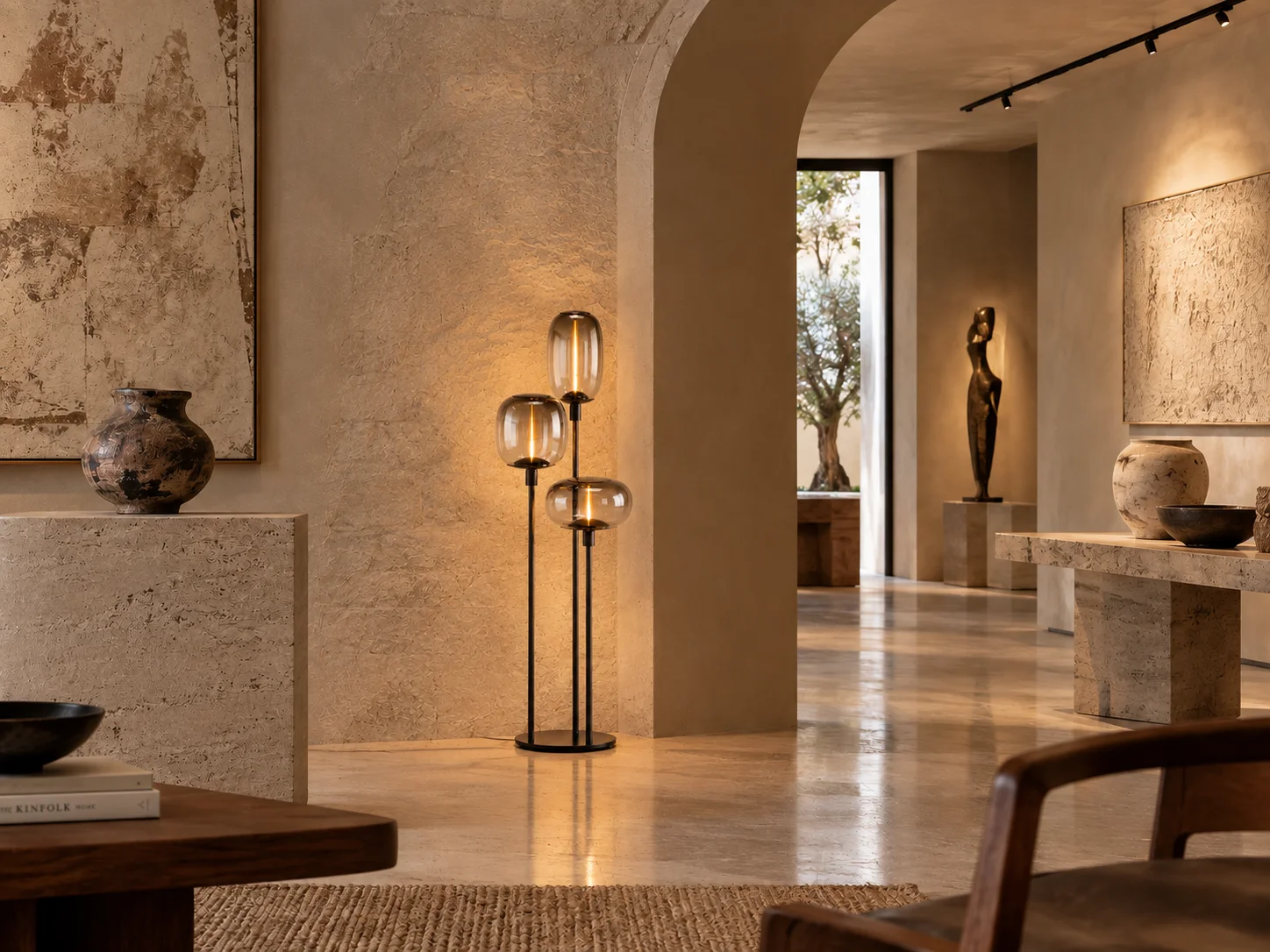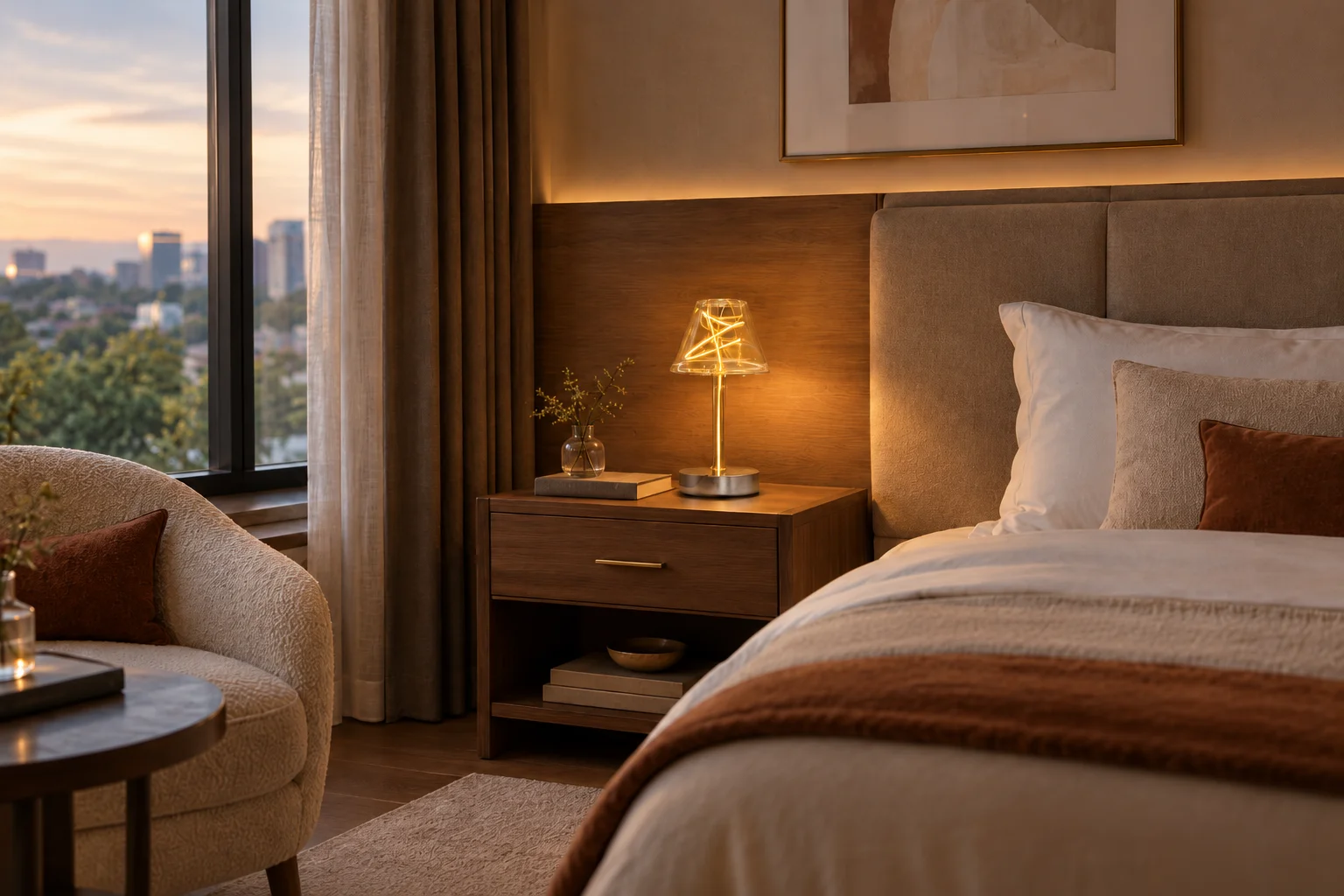
Hotel Room Lamps: What Hospitality Buyers Specify
A hotel room lamp leads a harder life than any lamp in a home. It…
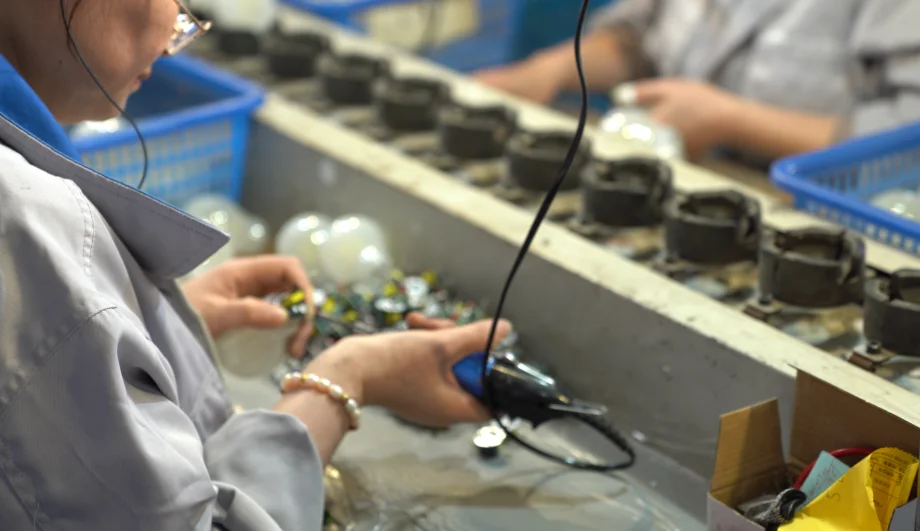
Most private-label lighting programs don’t fail at manufacturing. They fail at the hand-off — when a render hits a floor that has never built this shape. The render shows warm, even light; the first samples come back with a greenish tint and a seam nobody approved. By the third revision the launch window has closed. That isn’t a quality problem. It’s a design-transfer problem, and most of it is solvable before a tool is cut.
There is a wide gap between what gets called “custom lighting” and what actually is. Retailer private labels often run on the light end: take an existing luminaire, swap the finish, print a logo on the carton. Low risk, low cost, low differentiation — easy for a competitor to match next season. Real custom starts at the structure: a new diffuser, a re-engineered holder, a filament arrangement only your brand carries. That work protects margin because it can’t be copied by relabelling. The catch is it needs engineering at the factory, not just a catalogue to colour in — so decide which kind you need before you brief a supplier.
Most delays trace back to the brief, not the build. A brief that transfers cleanly names more than a shape. It specifies the material story (hand-blown glass, spun metal, ceramic), the colour-temperature window (we hold CCT within ±100K batch to batch), the CRI target, the light distribution (up, down or 360°), dimming behaviour, retail-ready packaging, and the target markets with their marks — CE and RoHS for Europe, UL and FCC for the US. A mood board and a hope usually returns a sample that looks right and performs wrong; a spec returns a product.
A first sample is a feasibility test, not a finished product. Done properly, it comes from production-spec materials — not the softer substitutes a sample room keeps for show. That is why a credible first sample runs about 15–20 days: the factory is proving the design can be made, not just mocked up. Custom designs usually need two or three rounds before the sample matches production intent — finish, light character, assembly tolerance. Brands that budget for them ship on time.
This is the question private-label brands ask least and regret most. When tooling and design files stay with the factory, your “exclusive” collection can appear under another label. Before sign-off, settle three things: who owns the moulds, who holds the design files, and for how long the factory agrees not to sell your variant to a direct competitor — an exclusivity window. None of it needs a lawyer on day one. It needs to be written into the agreement, not assumed from a good meeting.
A collection built for Europe and North America is effectively two products. Europe runs 220–240V on E27 with CE; the US runs 120V on E26 with UL. Different drivers, plugs, cartons, and a second set of certification paperwork. A North American version (120V/E26/UL/FCC) is a product-line capability, not a favour — and designing both SKUs into the first brief avoids the “now redo it for America” conversation six months later.
Decorative fixtures don’t need a container to start. We typically quote 300–500 pieces for a fixture program and can open a trial run at around 100 pieces so a brand can test shelf response before committing volume. LED filament bulbs sit on a different economy — 1,000 pieces, because glass, filament and driver are consumed in batches that only pay off at scale. The point is not the number; it is that the floor should match your risk, not the factory’s convenience. A supplier who offers only one blended minimum is asking you to bet big before you have learned anything.
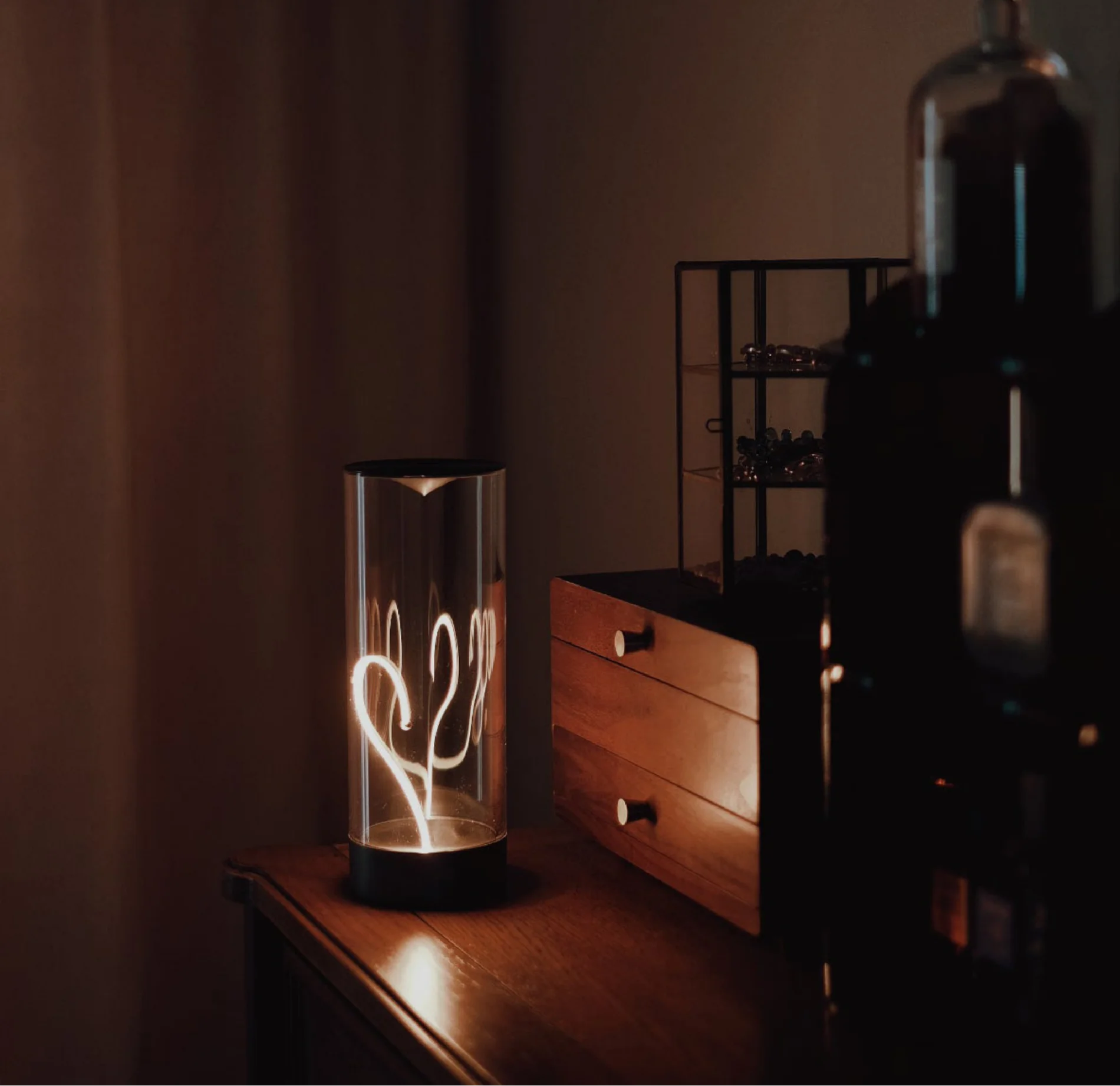
The fastest way to lose a private-label program is a hero unit that glows warm and a reorder that glows grey. Colour-temperature drift between batches reads to the customer as a defect, even when every unit passes test. Holding CCT within ±100K, specifying CRI honestly, and building with replaceable modules — now required under the EU’s ESPR, with a 100 lm/W filament efficacy floor arriving in 2027 — is what keeps a collection looking like one collection across seasons.
Custom lighting design rewards brands that treat the factory as a design partner from brief one, not a vendor from sample three. The cheapest revision is the one you make on paper — send the spec, the material story and the target markets, and let engineering respond while the design is still a drawing. Our ODM team works both ways: executing your design language faithfully, or contributing our filament-driven aesthetics as a starting point. When the brief is ready, talk to us — the earlier we see the spec, the fewer seasons it costs you.