Hotel Room Lamps: What Hospitality Buyers Specify
A hotel room lamp leads a harder life than any lamp in a home. It…

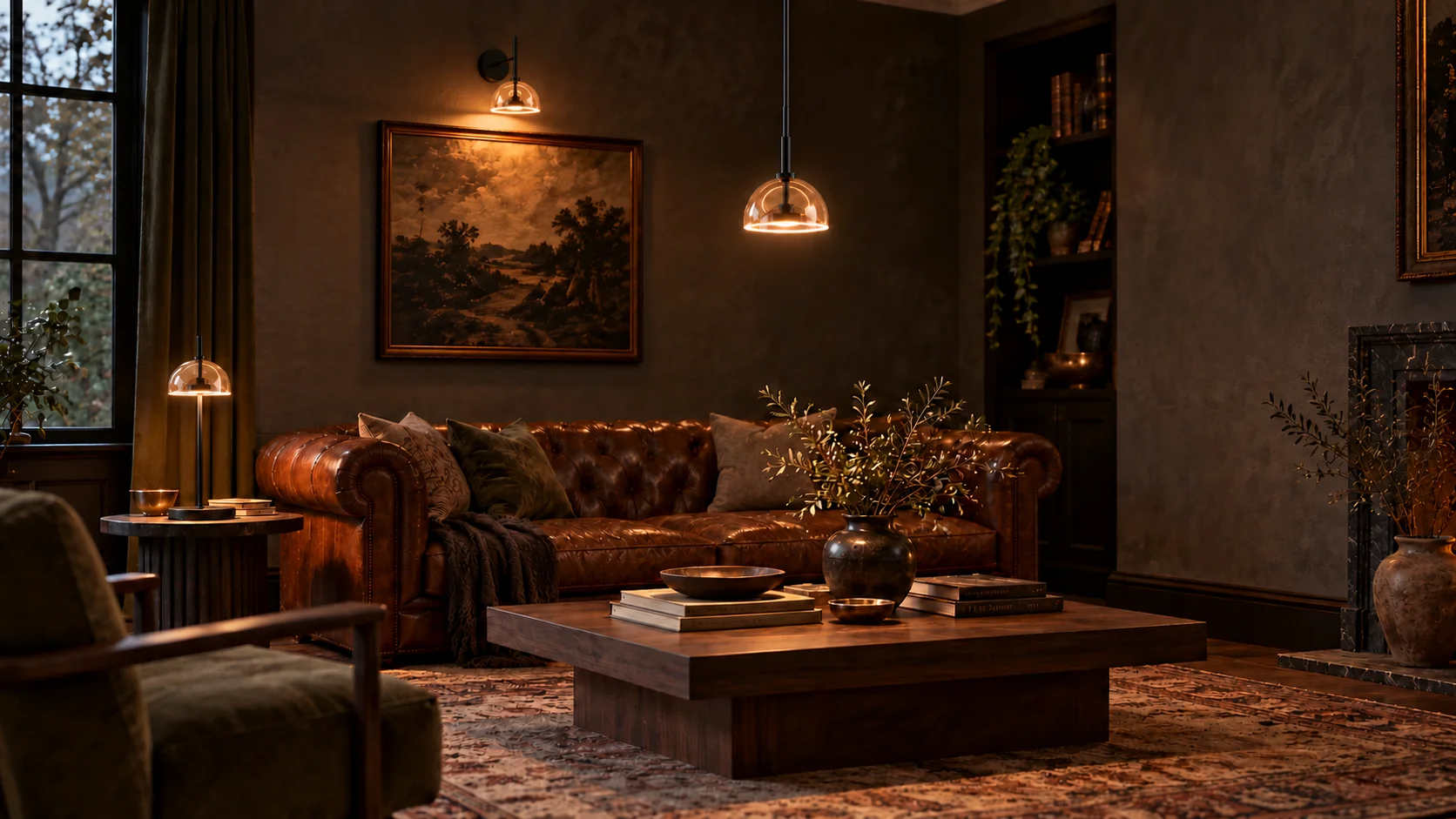
Mid-century modern is back — not as a passing revival, but as a durable design language. It keeps turning up in trend forecasts and in the collections of serious lighting brands, because it balances warmth, geometry and craft in a way few styles do. If you are choosing mid-century lighting for a home, a retail range or a hospitality project, the real question is rarely “is mid-century right?” — it is “which fixture, in which space, and why?”
This guide walks through a simple four-part selection framework: room, function, material and design intent. For the full background on what defines the style, see our guide to the return of mid-century modern lighting.
Mid-century lighting works best when the fixture matches the scale and purpose of the room.
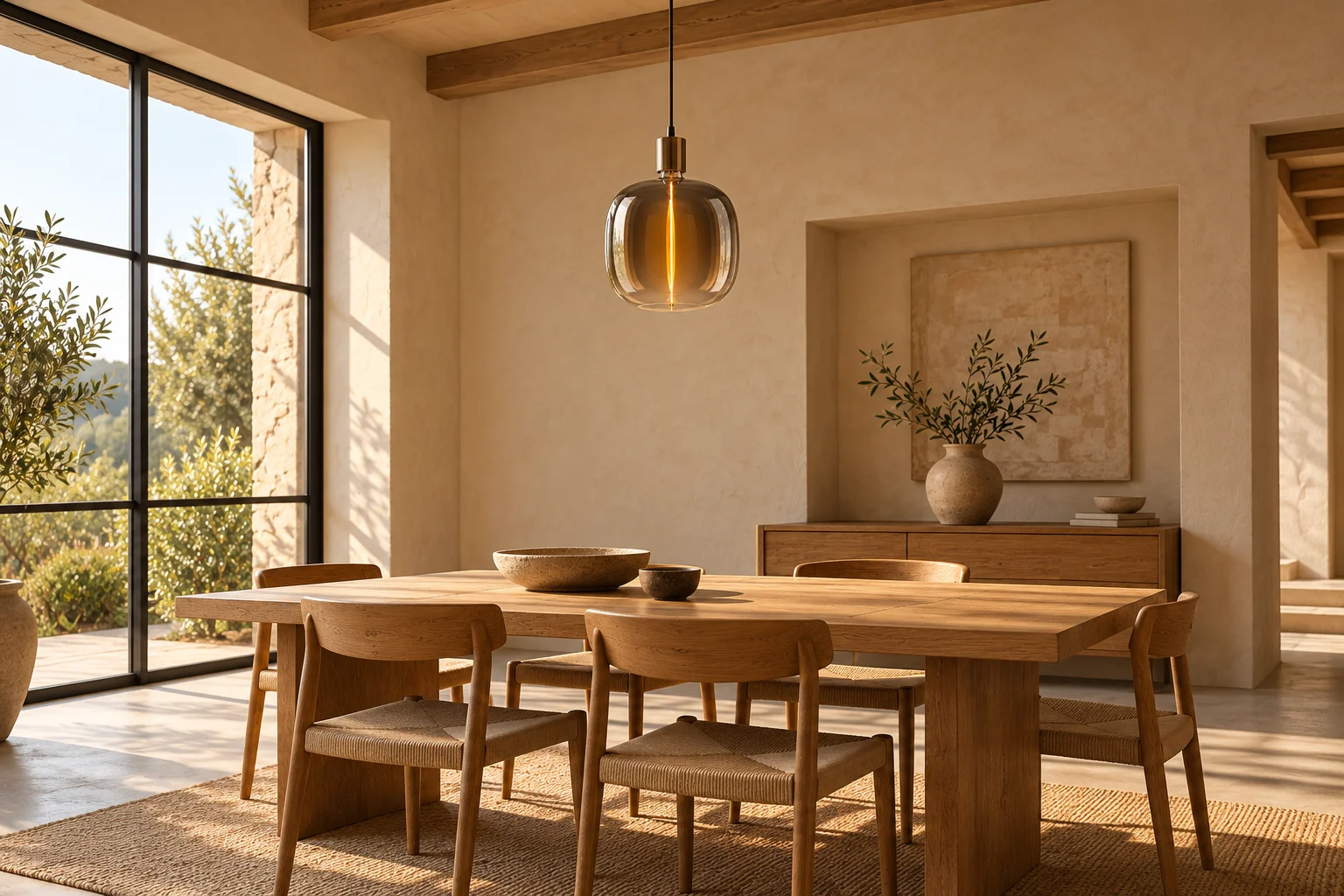
Dining rooms and kitchen islands: a pendant — or a cluster — anchors the space. Choose a globe, cone or dome shade in glass with a visible warm filament for the classic statement.
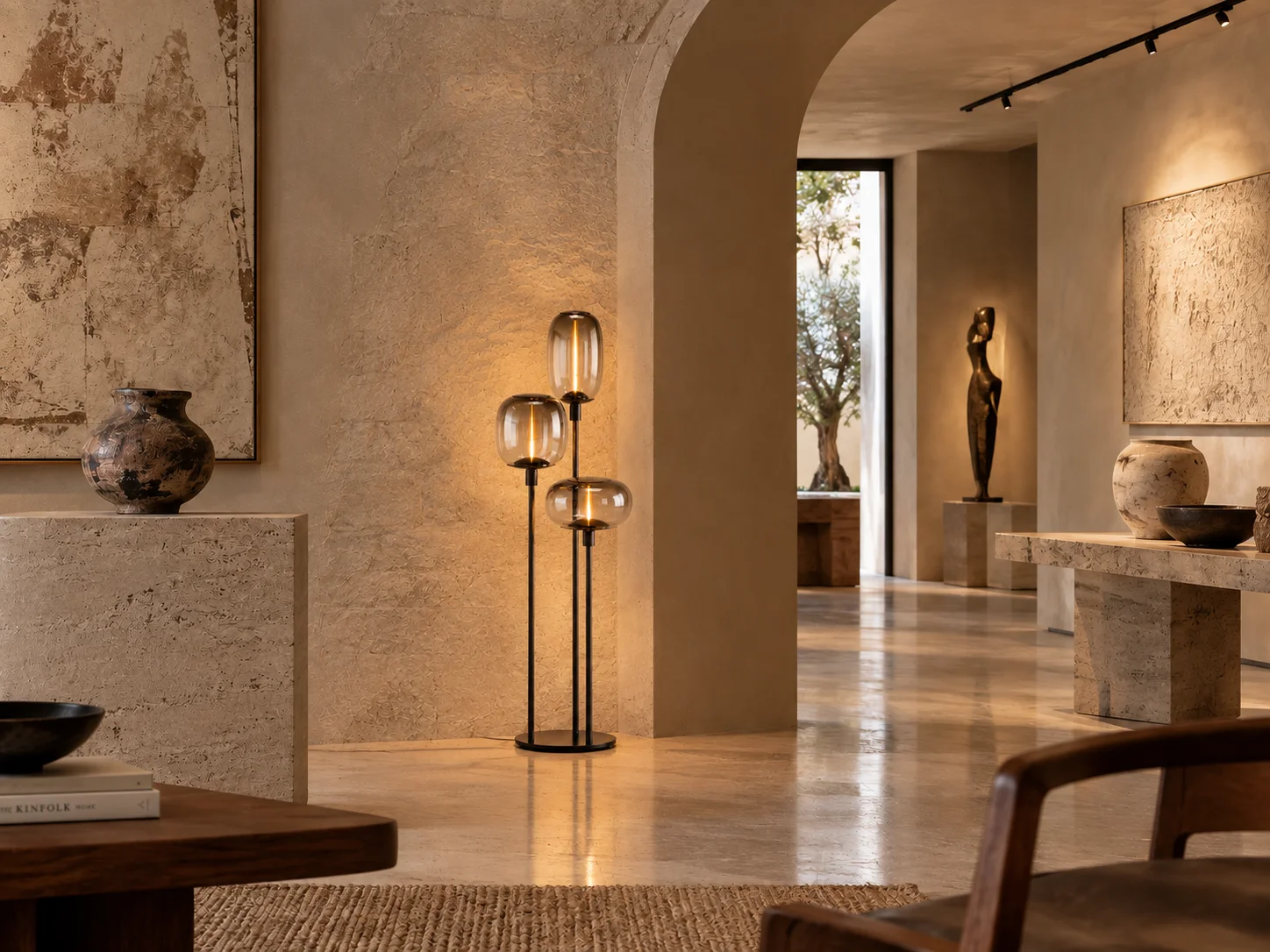
Living rooms and lounges: a floor lamp with a slim stem and a sculptural shade adds height and a pool of reading light. Arc and tripod silhouettes are the iconic choices.
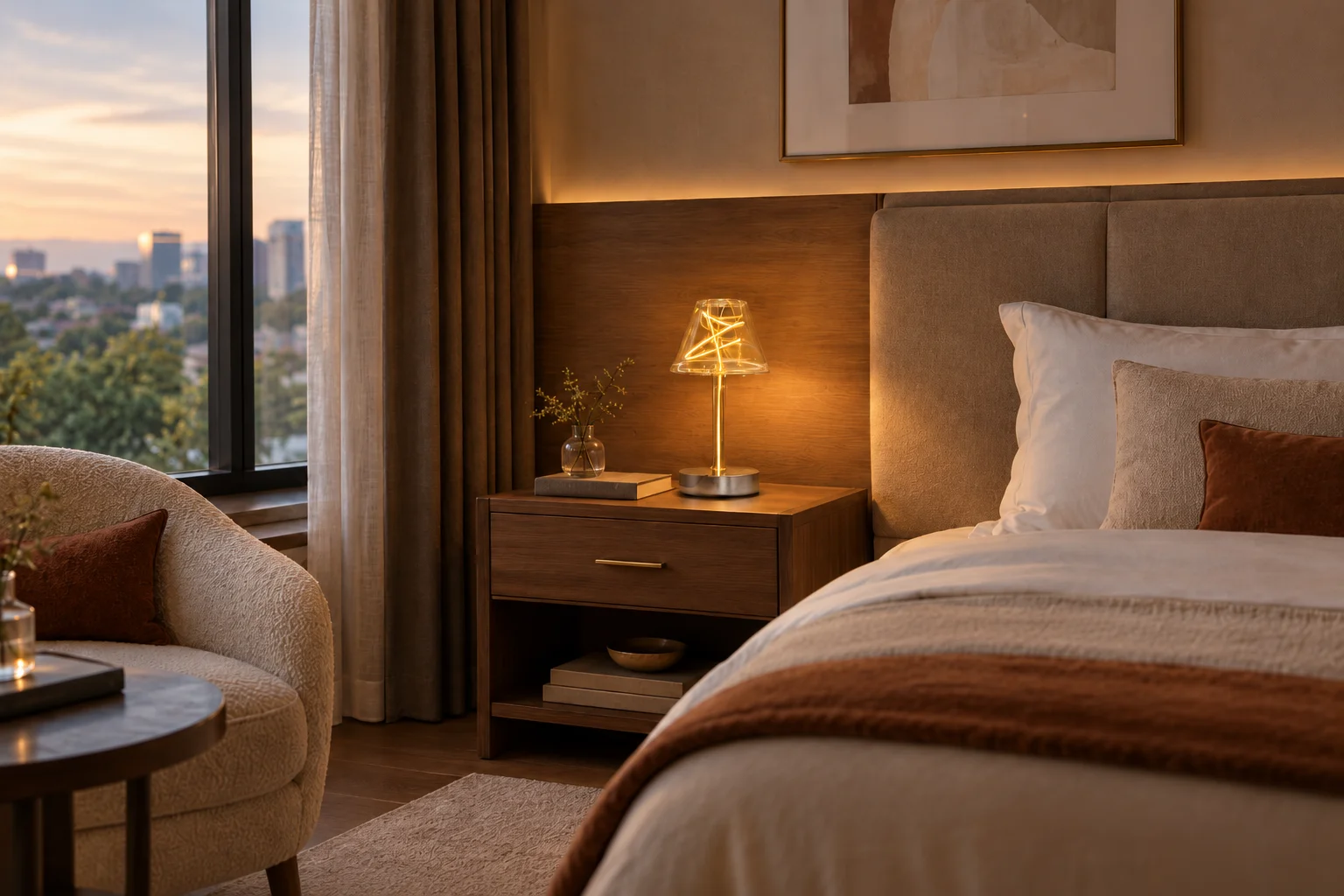
Bedside and console: a table lamp with a compact, balanced form. The best mid-century table lamps feel almost sculptural when off and soft when on.
The rule of thumb: pick the fixture that gives the room its centre of gravity first, then refine by function.
Mid-century design is not only a look — it is a lighting philosophy built on three layers: ambient, task and accent. Ambient fills the room, task focuses on reading or cooking, and accent draws the eye to an object or wall.
One factor that is easy to overlook is how a shade distributes light, not just how it looks. A fixture with a dual light source — one layer for brightness, one for warmth — lets a single piece cover both ambient and accent roles without swapping lamps. That is where form and function stop being a slogan and become a genuine buying decision.
Colour rendering is worth one final check. Mid-century rooms depend on warm, flattering light, so a high CRI — 90 or above — and a warm colour temperature around 2700K keep skin tones, brass and wood looking natural.
The mid-century material palette is narrow and deliberate: brass, glass and walnut. Brass (or brass-toned metal) warms the light and gains character over time. Glass — blown, tinted or opal — shapes the glow and is the style’s signature. Walnut and wood add a natural touch that keeps the look from feeling cold.
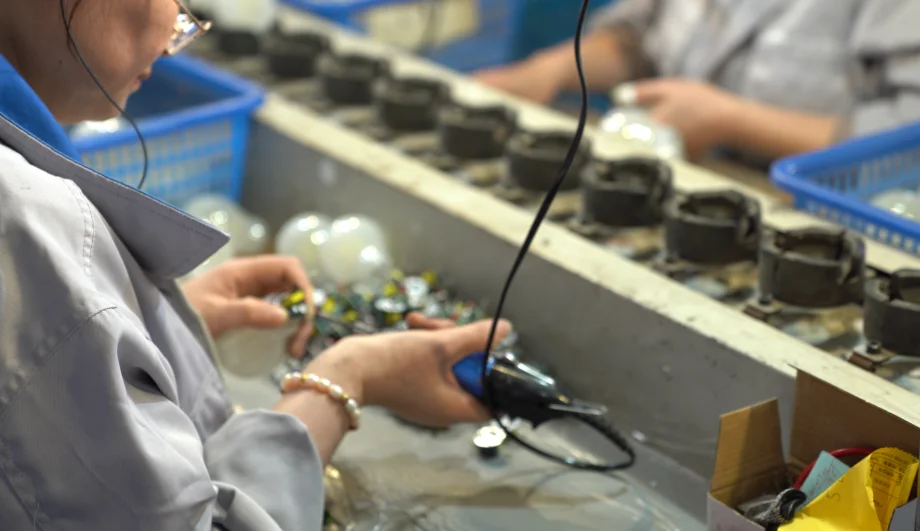
When comparing products, ask how a finish is made, not only what it looks like. A properly sealed brass finish and a controlled-atmosphere glass process are the difference between a fixture that looks right for a season and one that lasts a decade.
You do not need to be a purist. There are two legitimate directions. Authentic mid-century keeps faithful proportions and period materials with a clear reference to the 1940s–60s. Mid-century inspired keeps the same warmth and geometry but upgrades the technology — better LEDs, dimmability and dual-source flexibility.
Most buyers and retailers today choose inspired, because it keeps the aesthetic while modernising the light source. The important thing is coherence: pick one direction and keep every fixture in the room on the same wavelength.
If you are sourcing mid-century — or mid-century-inspired — decorative lighting for your own range, look past the catalogue and at the manufacturer behind it. The strongest partners can turn one design language into a complete family across pendant, table, wall and bulb, so your customers can build room by room. Ask about burn-in testing and certification too — every fixture aged and tested before shipping is one fewer quality issue downstream.
That is the thinking behind our Twins Series. Stella, its signature pendant, pairs a half-dome glass shade with a minimalist metal arm and a warm filament — the same glass-plus-metal-plus-warm-light vocabulary that defines mid-century, carried into a contemporary dual-source fixture. Custom glass shapes, finishes, drivers and packaging are available. For more on how we build decorative lighting for brands and retailers, see our decorative lighting ODM & OEM page, or contact our team to talk through a brief.