Smart Lighting Is a Control System, Not a Bulb: Buyer’s View
A smart bulb without its lighting control system is a bulb with a radio inside.…
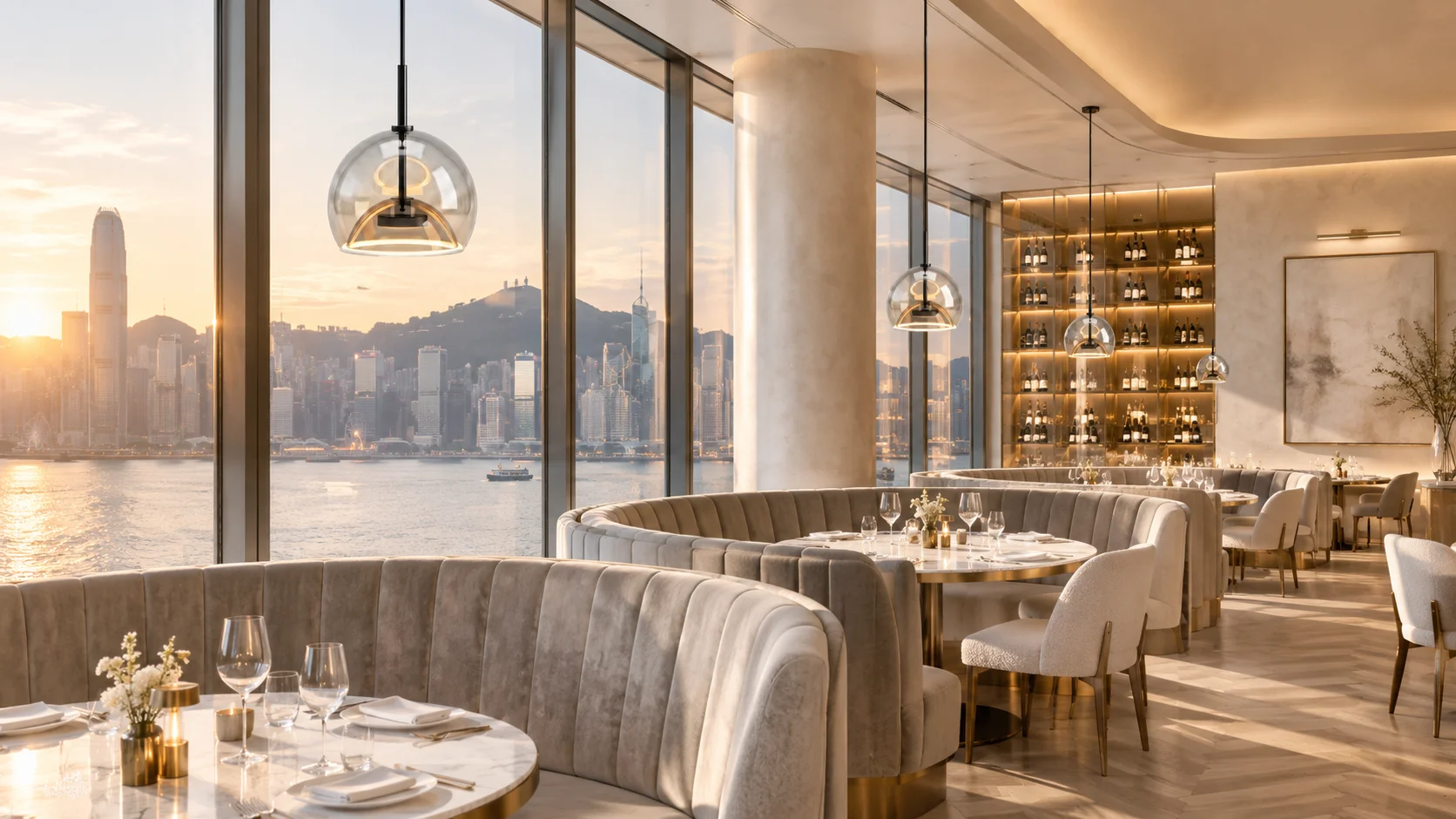
A pendant in a restaurant holds the hardest job in decorative lighting. It has to put pleasant light on faces across a two-hour meal, hold a dimmed scene at midnight, and still say something about the brand when the room is full and every sightline crosses it. Restaurant groups, hospitality designers and fit-out contractors feel this twice: once at the flagship, and again at location twenty, where the fixture has to arrive looking and performing exactly like the first. This guide covers what restaurant pendant lighting has to do, how to match fixtures to zones, which specifications fail in actual service, and how OEM and ODM customization work when multi-site consistency is the real requirement.
Restaurant lighting is usually described as three layers: ambient, task and accent. Pendants sit at the intersection. Over a dining table, a pendant is the task light — bright enough to read a menu, soft enough to flatter the people under it. Across the room, a field of pendants becomes the ambient layer and, just as importantly, the zoning tool: in open-plan dining, a lower, denser pendant rhythm tells guests where one area ends and the next begins without a single wall.
Two constraints separate restaurant work from residential. First, dwell time: guests sit in one position for an hour or more, so glare control and the light’s behavior at low dimming levels matter more than peak output. Second, repetition: a growing group is not buying one fixture, it is buying a repeatable specification across locations and reorder cycles.
Scale the fixture to the table, not the room. Widely used practice places the bottom of the shade roughly 75–90 cm above the tabletop — low enough to define the table as its own pool of light without blocking conversation. For long tables, plan a rhythm of fixtures so no seat falls between pools of light.
The bar tolerates — and often wants — a statement piece with more presence and output. It is visible from the entrance and photographed more than anything else in the room.
Stairwells and entrance voids call for suspension pieces that work at distance. Here the fixture spends most of the day unlit, so how it reads as an object matters as much as its photometrics.
Long shared tables need wide, even distribution rather than a single narrow beam. Fixtures with 360-degree illumination suit these runs, because light arrives from the full silhouette of the piece instead of one downward cone.
Restaurant installations tend to fail on details, not on looks. Check these before anything aesthetic:
For a single venue, catalogue product is often enough. For a group, the calculus changes: brand consistency across sites, controlled reordering, and a specification that survives staff turnover. That is where the manufacturing model becomes a purchasing decision.
Under ODM, an existing platform is customized — shade shape, finish, cord color, drop length, source — which is the fastest route to a differentiated fixture without a full development budget. Under OEM, the group’s own design or an approved reference is built to specification, which suits concepts strong enough to own their look.
For a full breakdown of how OEM, ODM and private label models compare for pendant programs, including the evaluation checklist before committing volume, see our pendant light manufacturer guide.
Practical parameters help the planning: for custom fixture programs, MOQs typically start around 300–500 pieces per SKU, first samples take roughly 15–20 days, and production runs around 45 calendar days after approval. The sequence that protects both sides: approved sample → signed specification sheet → pre-production run → AQL inspection → bulk release. Get the specification in writing before the deposit — verbal specs are the most common source of dispute in this channel. Our ODM and OEM partnership page sets out how we run this process.
Hangke Optoelectronics develops and produces decorative pendant lighting in-house, across glass, metal and mixed-material shades, with more than 500 global patents in LED filament and decorative lighting. Two platforms are worth a look for hospitality work:
Cup Cake decorative lighting spans pendant, wall, table and standing formats. For a restaurant, the pendant carries the dining tables while the same family answers wall sconces, bar counters and lounge corners — useful when a venue wants a recognizable fixture identity across the whole space instead of sourcing four unrelated products.
Twins uses a patented double-glass structure with an integrated filament to deliver 360-degree illumination with visual balance — a natural fit above communal tables and bar runs, where even, all-around light matters more than a narrow downward beam. Browse the wider range on our pendant lighting collection page.
If you are planning a restaurant or hospitality program, send a reference image, your target market and your expected number of locations. We will advise whether OEM or ODM fits, confirm the certification path, and return a sample plan with realistic dates. Let’s discuss your next lighting project.