Why Two Lamps That Look Alike Cost Different to Produce
A buyer sends the same reference to three factories and gets three prices that do…
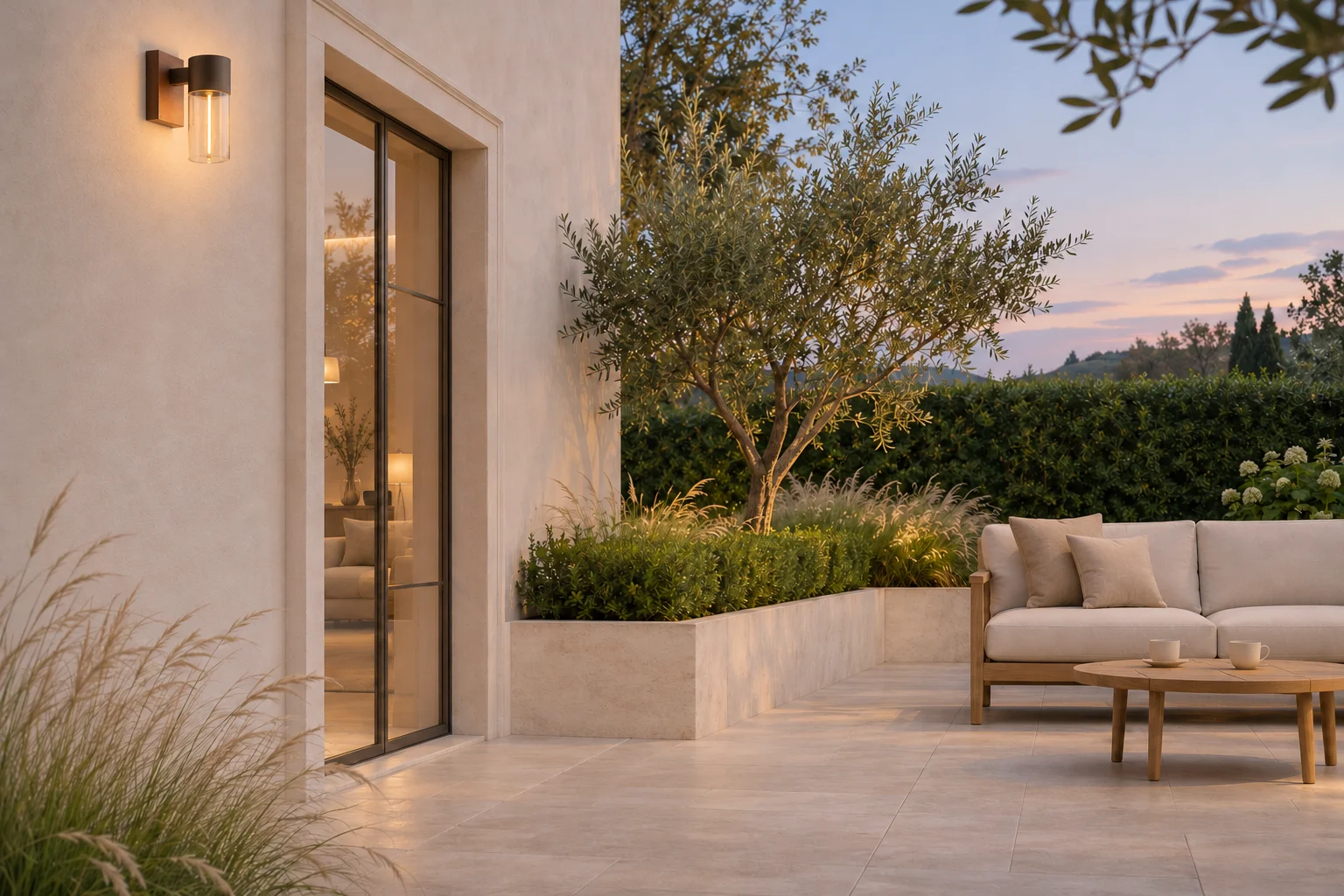
Architectural outdoor lighting specifications are usually fixed long before a quotation request reaches a factory. Mounting condition, ingress protection, market version and finish are locked into drawings and schedules early — and changing any of them later means new tooling, re-certification and a delayed programme. This guide sets out a working checklist for specifiers, importers and purchasing teams who need to define the right product up front, and what a manufacturer needs before a price can be trusted.
The same luminaire can behave very differently on an exposed facade than under a covered entrance. Define the installation condition first: fully open to rain and wind, a sheltered walkway, or a recessed and protected position. That single decision sets the ingress protection tier you should specify.
A useful baseline for exposed outdoor positions is “IP54 or higher”. An IP rating describes protection against solid particles and water only — it says nothing about UV stability, salt-spray resistance or how seals age through years of temperature cycling. Two fittings with the same IP mark can age quite differently on a coastal facade. Treat the rating as a starting threshold, then ask how the housing, finish and seals are qualified for your actual environment.
A price is only as reliable as the brief behind it. Four inputs let a manufacturer turn an enquiry into an engineering-checked quotation rather than a rough estimate:
Send all four and the response can be costed properly. Miss one and the number will carry assumptions — assumptions that tend to surface as variations once the project is already moving.
For most architectural programmes, the industrial design does not need to be recreated for each market. The housing, optics and surface treatment can stay common. What changes is the electrical and compliance layer: EU builds follow 230V with CE and ErP documentation, while North American builds follow 120V with UL and FCC files.
Specifying both versions from the outset avoids a common problem — a design frozen for one region, then adapted later at the cost of re-tooling and re-certification. Confirming the market split early also keeps spares and replacement parts consistent across projects, because both versions share the same underlying design. This is where ODM capabilities matter: one industrial design across two certified market versions.
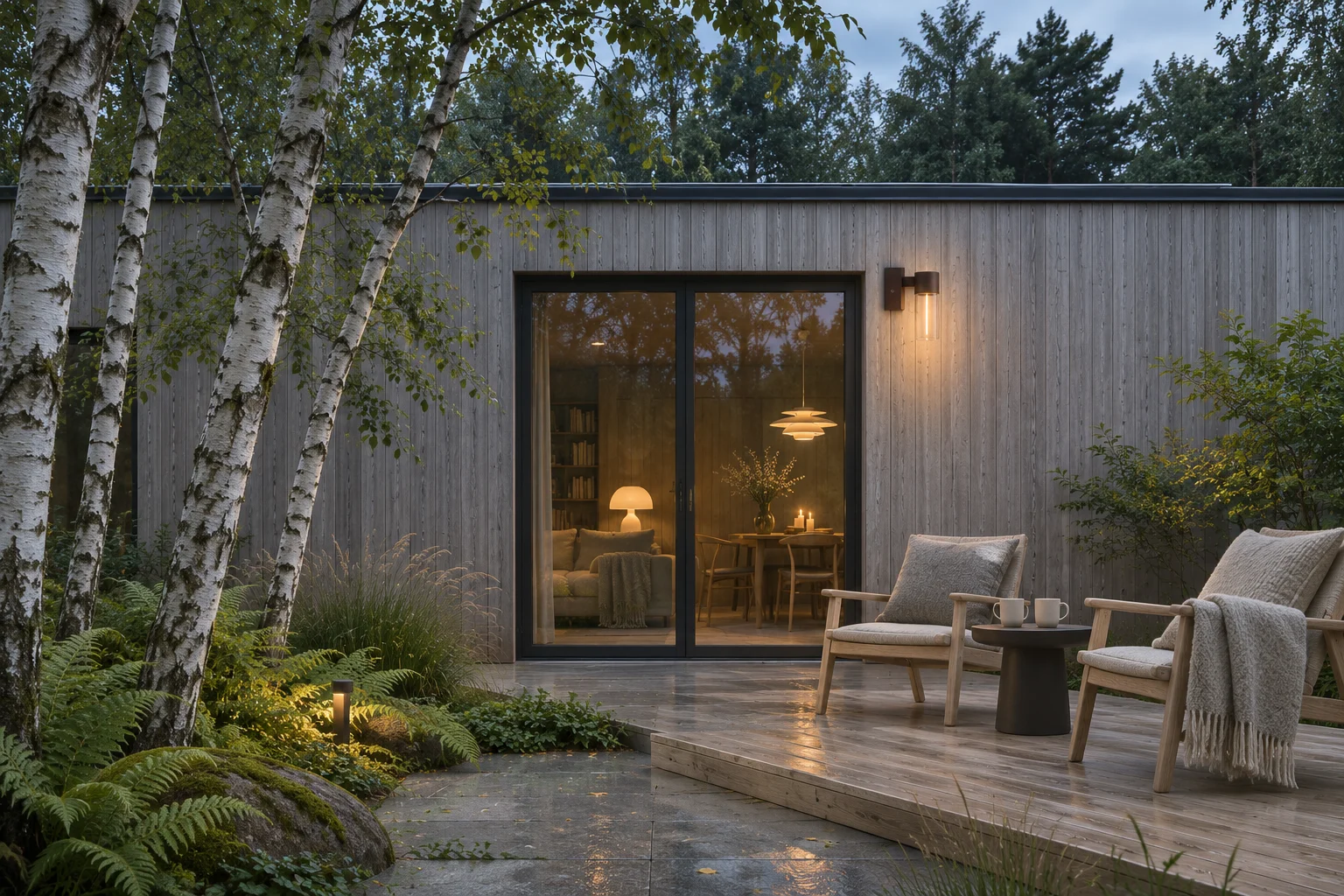
Across an outdoor lighting range, there is no single “best” finish. The right specification depends on the substrate, the coating system and the environment the fitting will actually face. Rather than assume one solution fits every product, build your evaluation around questions a supplier can answer with evidence:
The goal is not to find a universally superior material, but to match a documented finish to the conditions your installation will see.
On multi-phase projects, the risk is rarely one bad fitting — it is drift between batches. Consistency is best managed as a process rather than a published figure: approve a signed sample, photograph it under a fixed light source, have both parties sign off, and write that reference into the purchase order.
That signed reference becomes the benchmark for every later batch and for replacement parts. It gives both sides something concrete to resolve against if a shipment does not match expectations, and a documented quality control process keeps it repeatable.
Once the specification is agreed, sample development typically takes 5–15 days depending on how much of the design is new. Certification routes should be confirmed before tooling is committed — changing a driver or a lamp holder after a mould is cut is both expensive and slow.
Sequencing matters: freeze the electrical and certification route first, then release the appearance elements (finish, optics, trim) against the signed sample. This keeps the schedule from slipping when a compliance detail forces a late change.
Decorative outdoor luminaires are generally ordered in the 300–500 piece range per model. Confirm the exact figure for your specific design, together with quotation preconditions and the certification route, during the briefing stage rather than after tooling begins. Lock these early and pricing will not restart mid-programme.
Before you send the next request for quotation, check that your brief covers:
A brief built on these five points gets a usable quotation back faster, and one far less likely to change mid-project.
To discuss an architectural outdoor lighting programme, send your drawings and requirements to Hangke through our contact page for an engineering-checked quotation and sampling plan.