Hotel Room Lamps: What Hospitality Buyers Specify
A hotel room lamp leads a harder life than any lamp in a home. It…

Sourcing insights for design-led brands, retail buyers, wholesalers and purchasing teams
Decorative lighting has stopped being an accessory. At Light + Building 2026 in Frankfurt, the industry shifted from cool minimalism toward “Living Light” — layered lampscaping, sculptural portable fixtures, tunable colour temperatures and honest natural materials. The market is moving with it: the LED filament bulb segment alone is projected to grow from $8.5 billion in 2025 to $28.4 billion by 2032, roughly 18.8% CAGR.
That growth is pulling three buyer types into the same category. Design-led brands want their language manufactured with precision. Retailers want differentiated private labels at retail cost. Wholesalers want dependable volume, breadth and paperwork that clears every border. Different questions, same supplier pool — and the same regulatory clock.
Designer lighting brands build value on authorship: a signature shape, a material story, a light quality that carries a name. What they ask of a manufacturer is usually threefold.
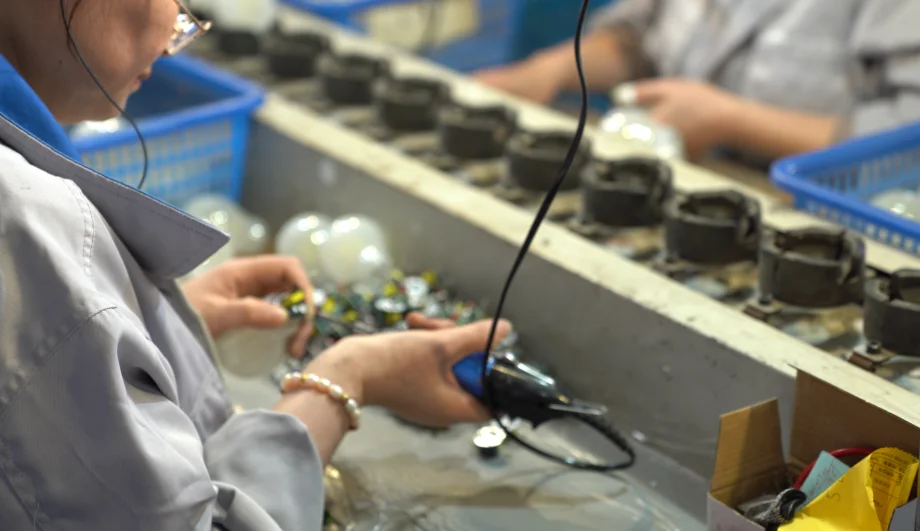
The highest-margin work in decorative lighting (hand-blown glass, hand-wound filaments, premium vintage lines) depends on craftsmanship. The ask is to reproduce that craft consistently, from a one-off sample to a repeatable, standardised product line without losing the signature.
European regulation has become the invisible entry ticket. The EU’s Ecodesign for Sustainable Products Regulation (ESPR) is now in full effect: fixtures need replaceable modules, EPREL registration, A–G energy labelling and circular materials. RoHS and REACH demand full material disclosure, down to solder alloys and phosphor coatings, and LED filament bulbs face a minimum efficacy of 100 lm/W from 2027. Design teams rarely carry this capability in-house; they look for a partner who does.
Small-batch premium has a fragile cost structure: tungsten, glass and brass fluctuate, and bespoke orders strain inventory. A partner that sequences sample, pilot and volume, with predictable lead times, turns a collection into a business.
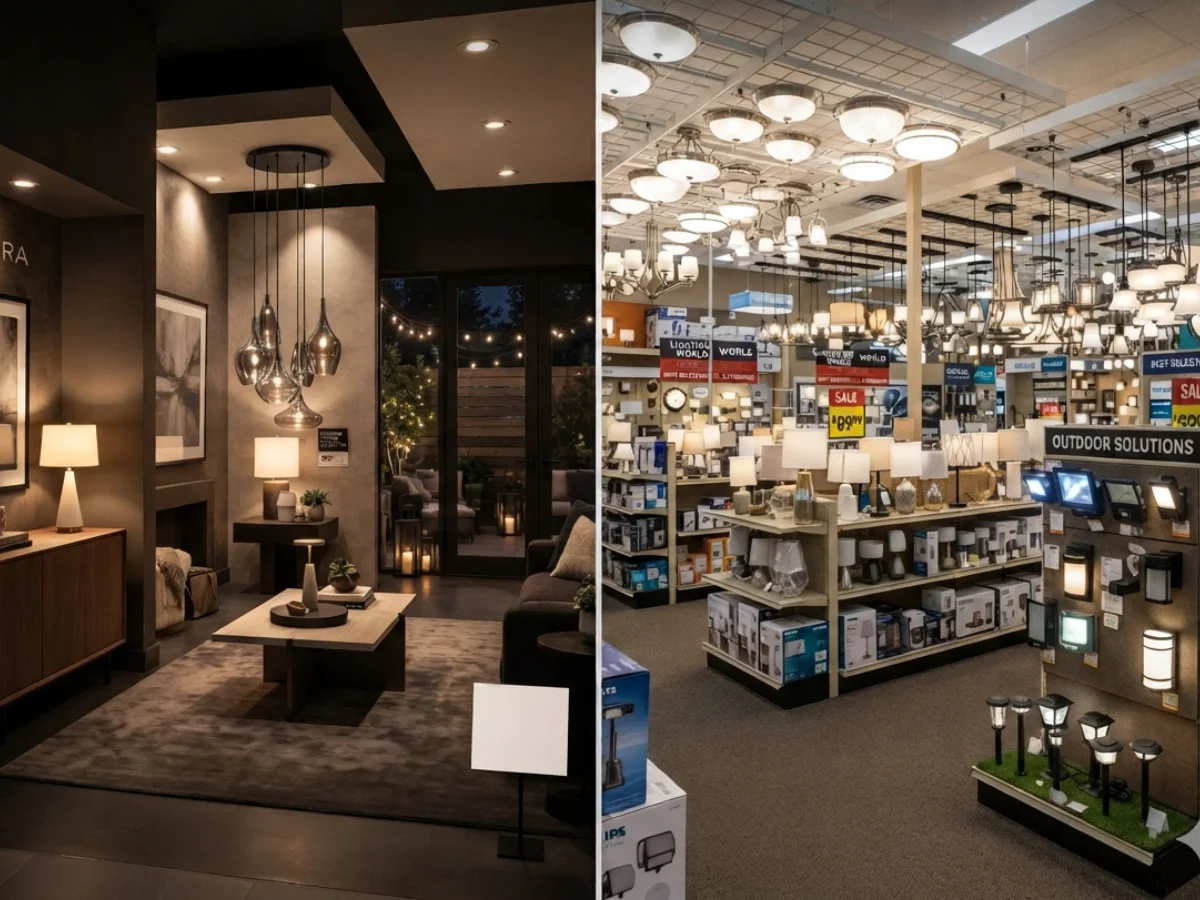
Retailers compete on assortment and speed, with different sourcing questions.
Own exclusive brands are now core strategy: Kingfisher’s private labels generated £5.5 billion, around 43% of group revenue, with sustainable home products reaching 70% of that portfolio. Retailers need a designer-grade design language at retail-scale cost: the exact brief of a private label lighting ODM.
Sustainability ratios have become hard procurement criteria. Suppliers that evidence replaceable modules, certified efficacy and traceable materials win shelf space; those that cannot are deselected. Retailers outsource that compliance risk to suppliers that can document it.
Marketplaces and retail media (reportedly about 3% of Kingfisher e-commerce revenue) let retailers test and scale products quickly. The right supplier shortens time-to-shelf: samples, cost files and compliance documents ready before the buying cycle closes.
Wholesalers sit further from the consumer and closer to the warehouse. Their priorities are volume, reliability and breadth.
A wholesale decorative lighting business lives on order predictability: consistent quality across batches, colour-temperature consistency within CCT ±100K, and pricing that holds over a season.
One shipment may serve several countries, needing energy labels, RoHS declarations and material disclosure files that satisfy different jurisdictions without back-and-forth.
Decorative, outdoor and LED filament lines sourced together reduce logistics and qualification overhead — one audit, one quality system, one partner.
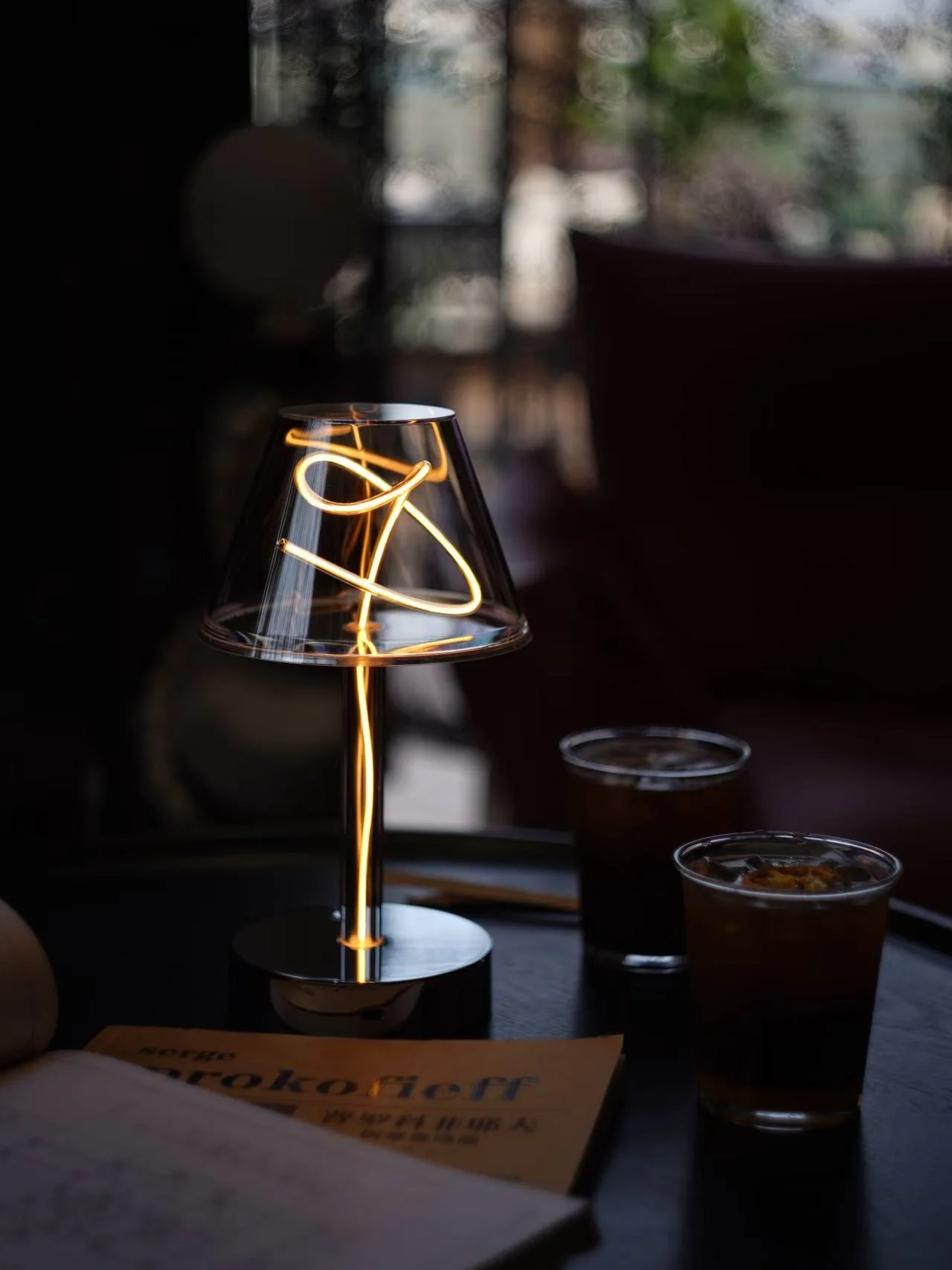
Strip the differences away and all three buyer types converge on the same capability list: faithful design execution, replaceable-module engineering, full compliance documentation, colour and quality consistency, and honest lead times. That is the definition of a specification-grade decorative lighting manufacturer.
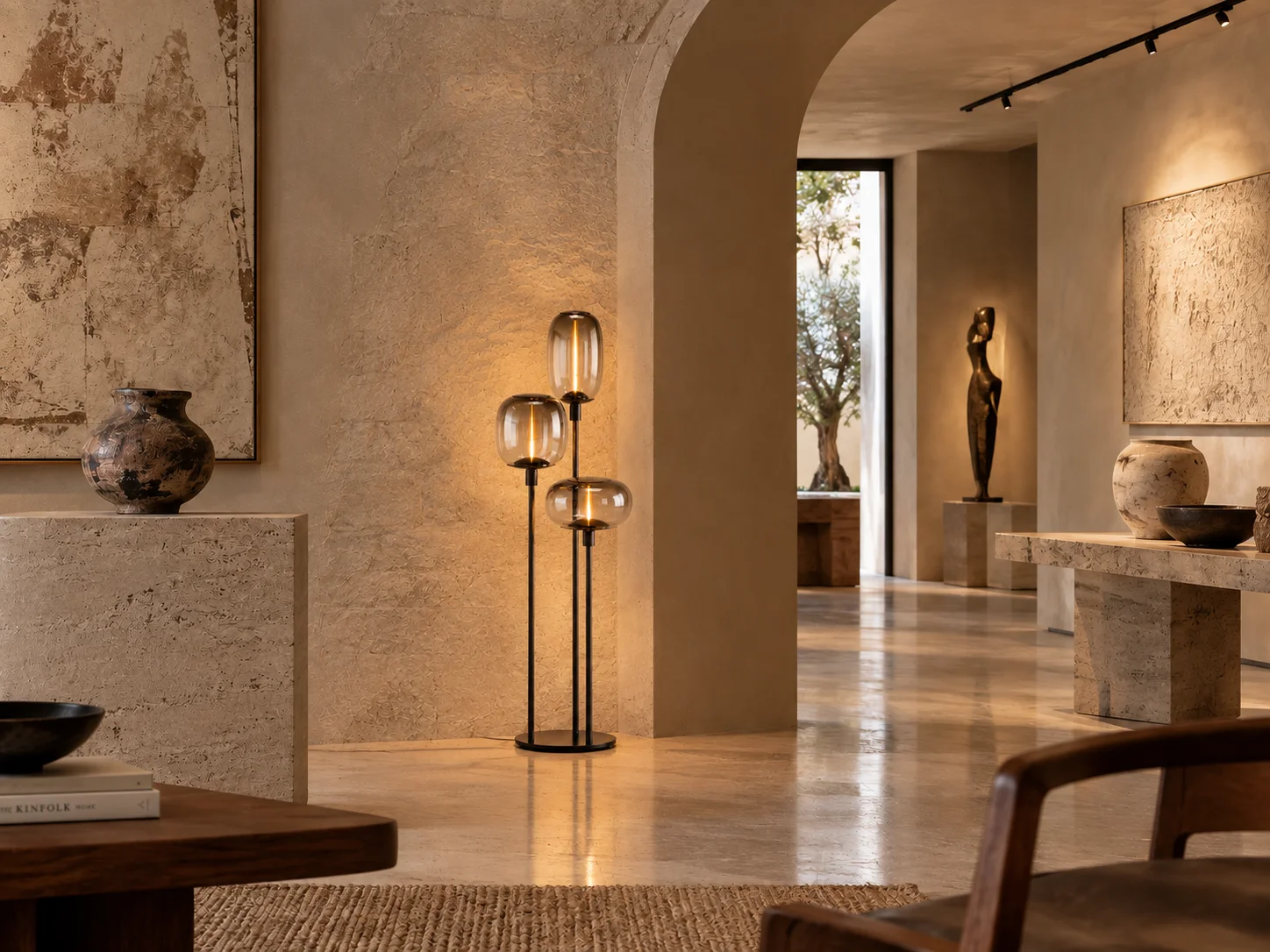
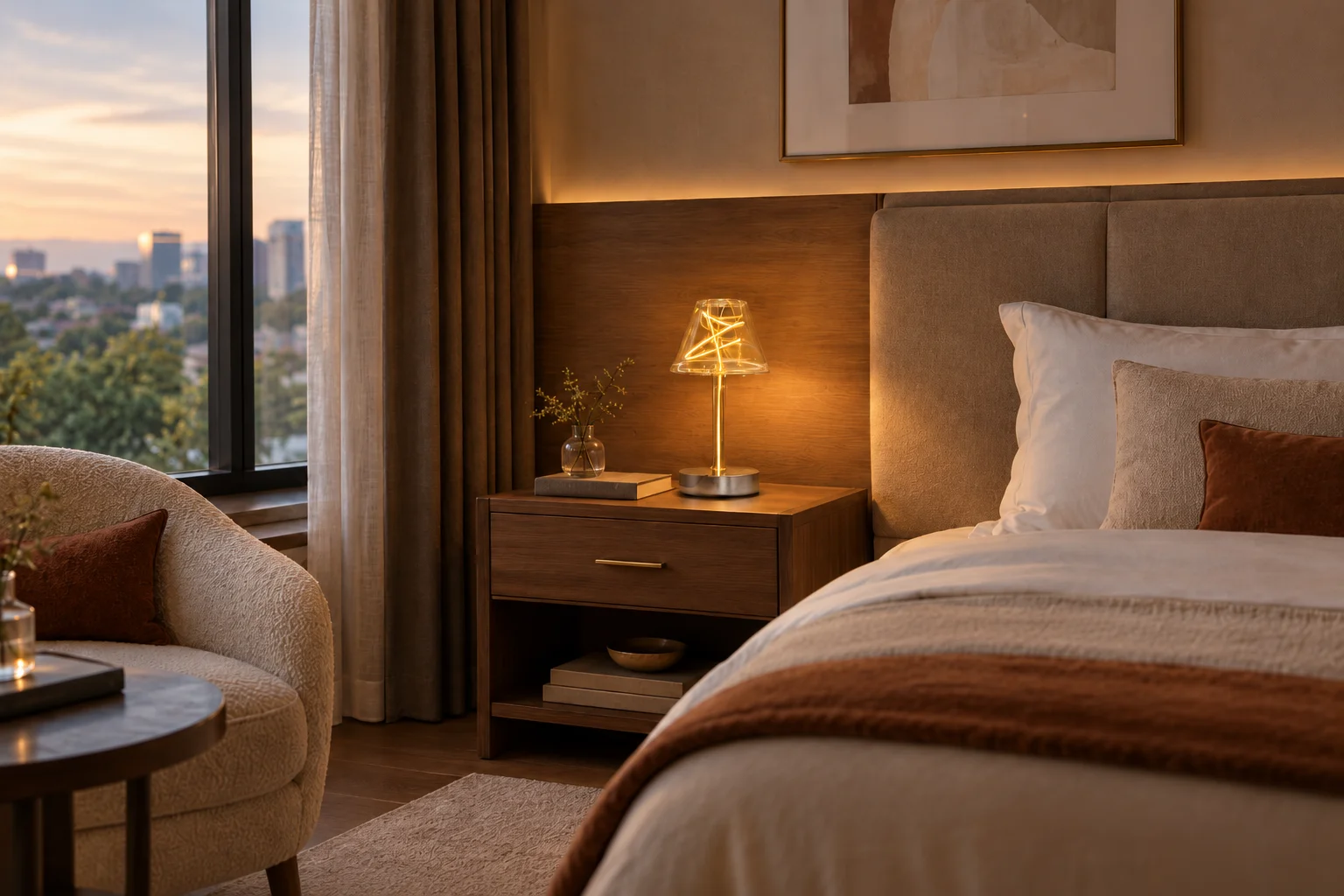
It is also where Hangke works. As an ODM/OEM manufacturer of decorative lighting, outdoor lighting and LED filament bulbs, Hangke builds on its own language — “Rethinking the Filament.” The DORA series draws on Eastern aesthetics and natural forms; the Twins series uses twin-glass construction for 360-degree light. Warm colour temperatures (2200–2700K), dimming support and high colour rendering match what hospitality buyers specify — filament options already account for around 45% of decorative lighting selections there, 67% prefer warm light and 54% require dimming. Hand-blown glass and filament craftsmanship are paired with replaceable-module design and full material disclosure, supporting EU ESPR and the 2027 efficacy roadmap. The same factory serves brand-owner customisation, retailer private labels and wholesaler volume alike.
Before shortlisting a custom lighting manufacturer, ask these four questions:
In 2026, decorative lighting rewards whoever bridges creativity and scale. The same regulatory clock applies whether you sell a signature piece, a store range or a container, and a good ODM does not take sides: designer brands get design fidelity, retailers get differentiation, wholesalers get dependable supply. If you are planning next year’s assortment, our ODM team would welcome the conversation.
One concrete example of that bridge is our ambient lighting range — a cordless, dimmable family developed from a single design language, then adapted per market in finish, CCT and packaging.
Explore our ODM lighting manufacturer capabilities — from chip to fixture.