Best Mid-Century Lighting: How to Choose for Your Space
Mid-century modern is back — not as a passing revival, but as a durable design…

For years, minimalism dominated the global interior design industry.
For lighting brands, distributors, and retailers, this trend isn’t just about interior design — it’s a product development and inventory planning signal. The Mid-Century Modern lighting category has been growing steadily across North America and Europe, with pendant lights, floor lamps, and wall sconces leading demand. In this guide, we break down the key design principles driving MCM lighting purchases in 2026 — and what they mean for your product lineup.
Cold tones, ultra-clean spaces, and restrained decoration once defined what people considered “modern luxury.” But today, consumers are gradually moving away from overly cold and impersonal interiors, searching instead for spaces that feel warmer, more emotional, and more timeless.
That is why Mid-Century Modern design is making a strong comeback.
According to insights from Business of Home, the design world is revisiting a richer and more expressive aesthetic language — one that combines historical references with contemporary structure and clarity. Dark woods, exotic marble, polished metals, glossy lacquer finishes, intricate craftsmanship, and geometric symmetry are all returning to modern interiors.
What makes Mid-Century Modern relevant again is not simply nostalgia.
In an increasingly uncertain world, people are looking for emotional comfort through spaces that feel structured, balanced, and visually clear. Mid-Century Modern interiors offer exactly that through clean geometry, symmetrical compositions, strong material contrasts, and architectural order.
At the same time, today’s consumers are increasingly drawn to:
And within this design movement, lighting plays one of the most important roles.
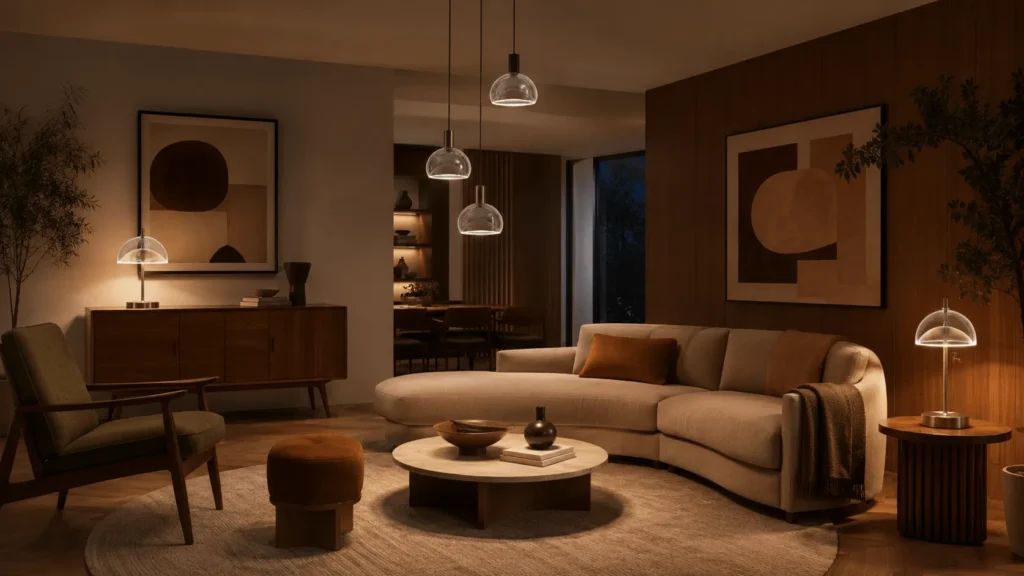
Lighting is no longer only functional illumination — it has become an artistic expression of lifestyle, atmosphere, and identity.
For lighting brands and manufacturers, the revival of Mid-Century Modern also signals a larger market shift: consumers are seeking products that combine aesthetics, emotion, and long-term design value.
As a leading LED lighting OEM/ODM partner in China, Hangke has been closely following these evolving global interior trends, helping international lighting brands and buyers develop products that balance timeless design language with modern LED innovation.
Mid-Century Modern interiors are not about excessive decoration.
Instead, they focus on artistic structure, proportion, and atmosphere.
In this style, lighting serves three important functions:
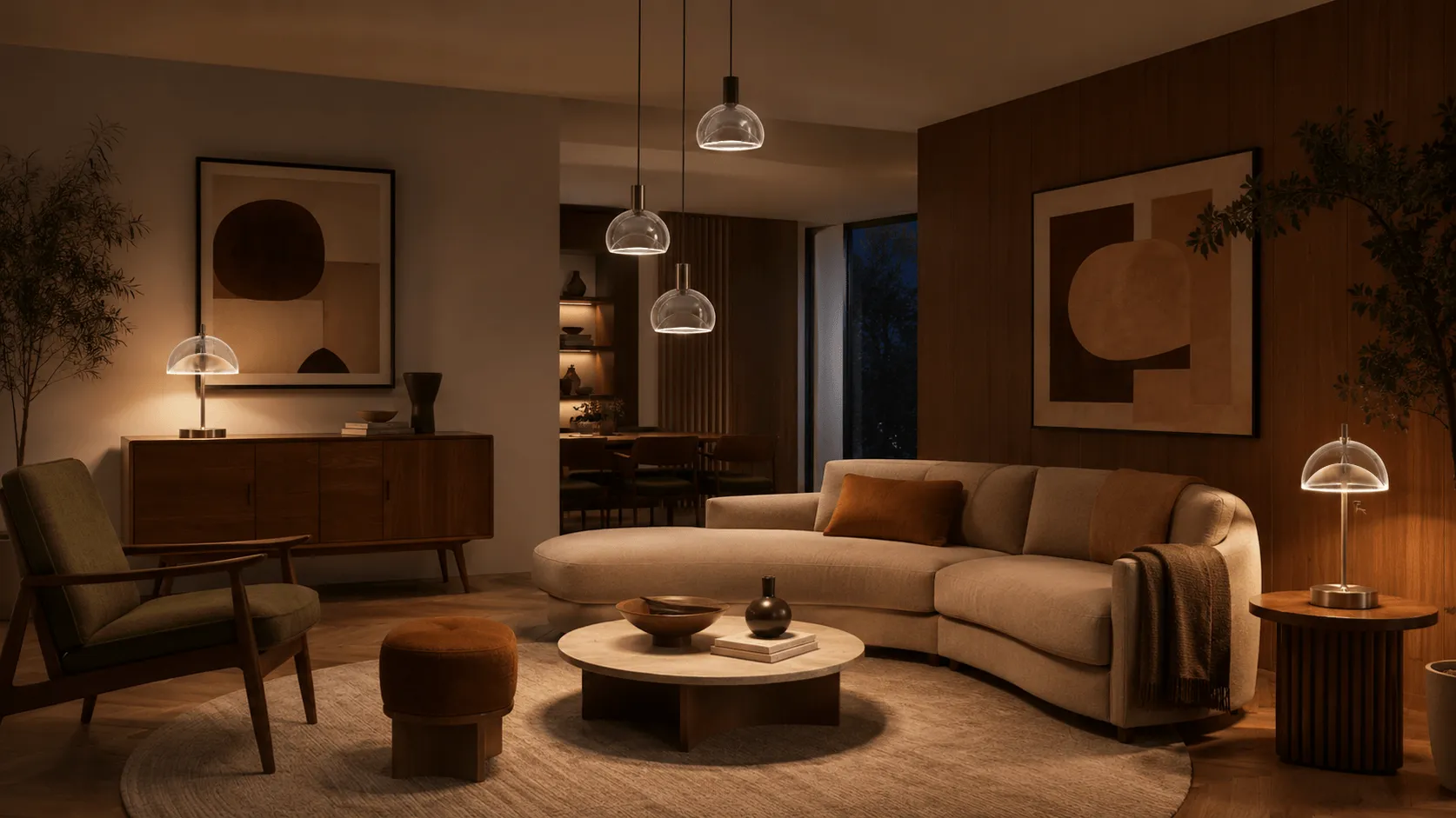
Mid-Century Modern spaces emphasize depth and composition.
Rather than relying on a single ceiling light, designers often combine multiple light sources at different heights to create rhythm and visual balance within the room.
Warm lighting helps natural materials reveal their richness.
Dark walnut wood, brushed brass, acrylic, smoked glass, and textured stone all become more expressive under soft warm lighting.
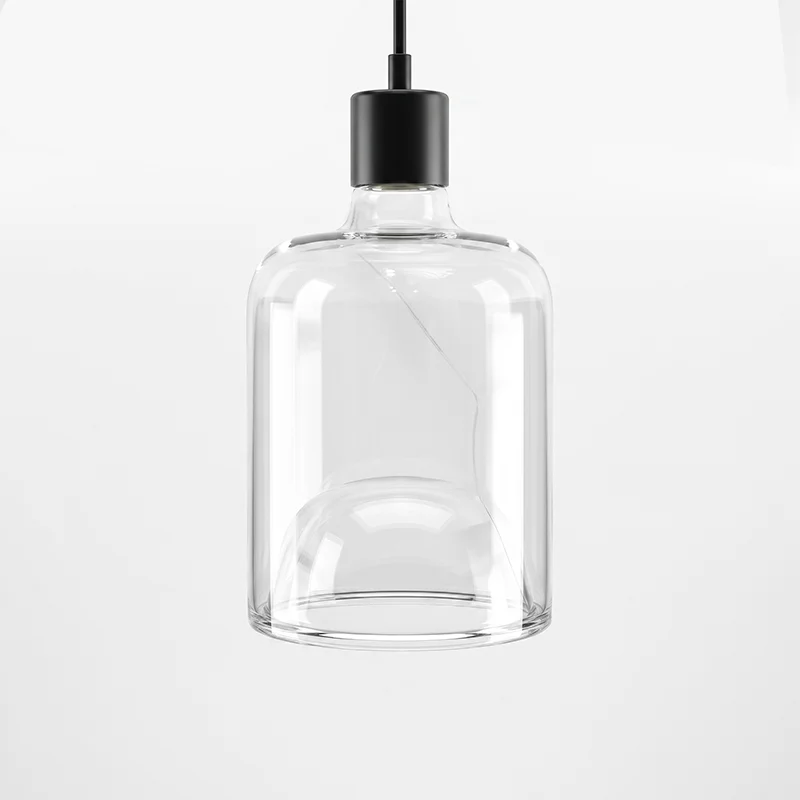
In Mid-Century Modern homes, lighting fixtures are often sculptural centerpieces.
Even when turned off, they function as artistic objects that define the personality of the space.
This is why many contemporary lighting brands are now blending retro-inspired silhouettes with modern LED technology and smart dimming systems.
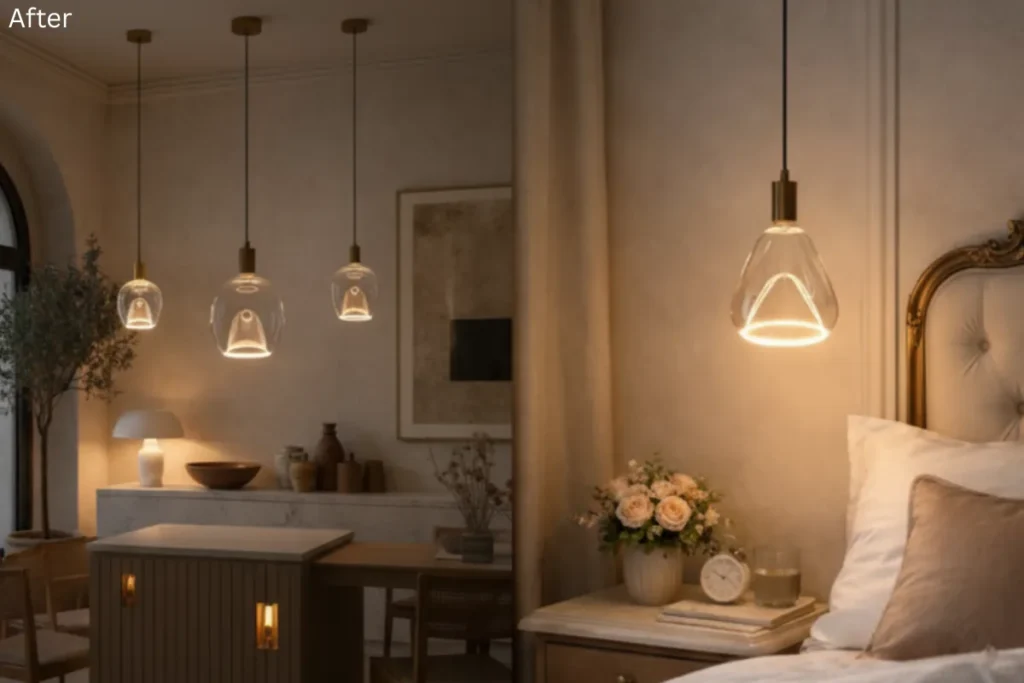
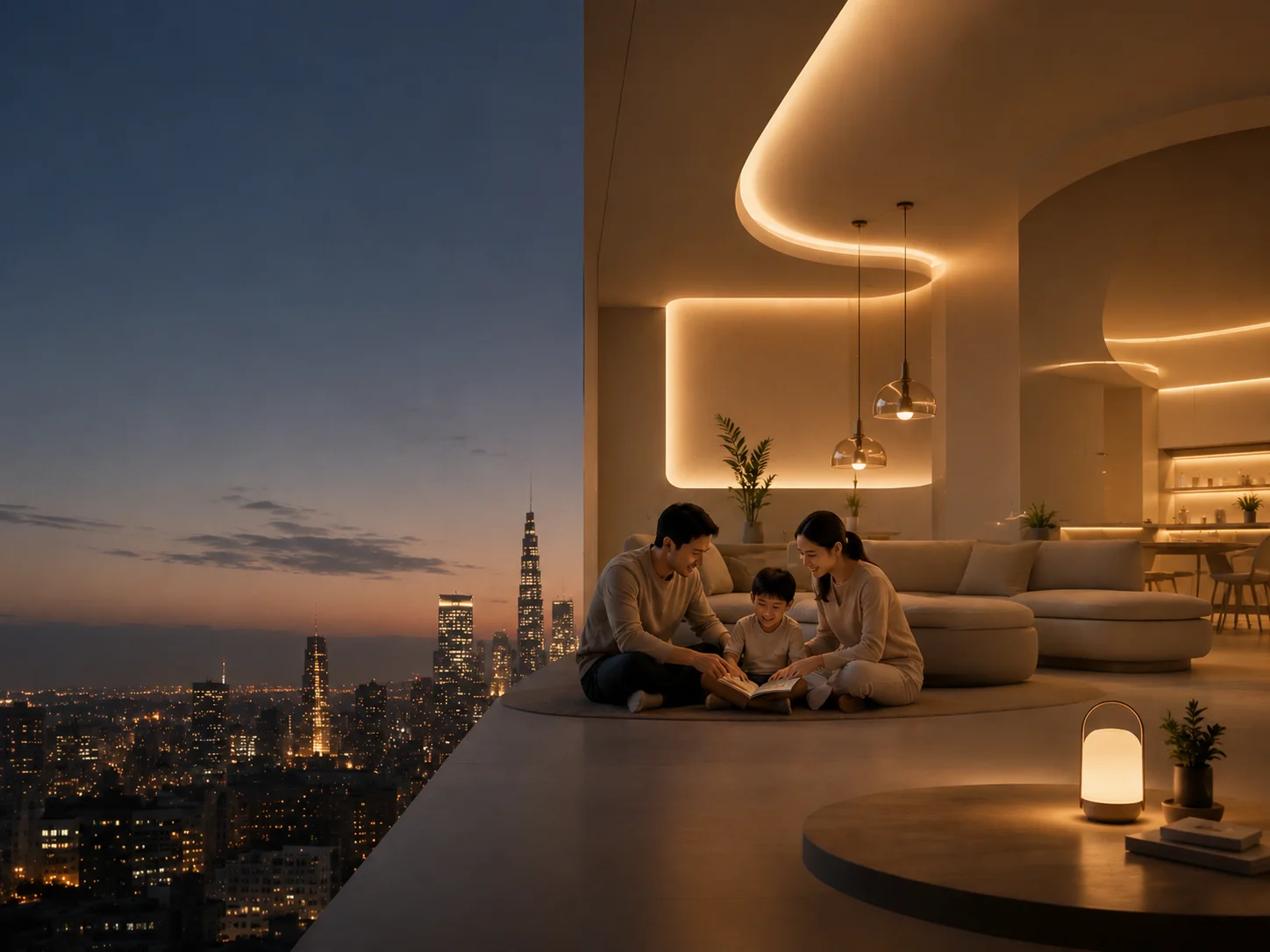
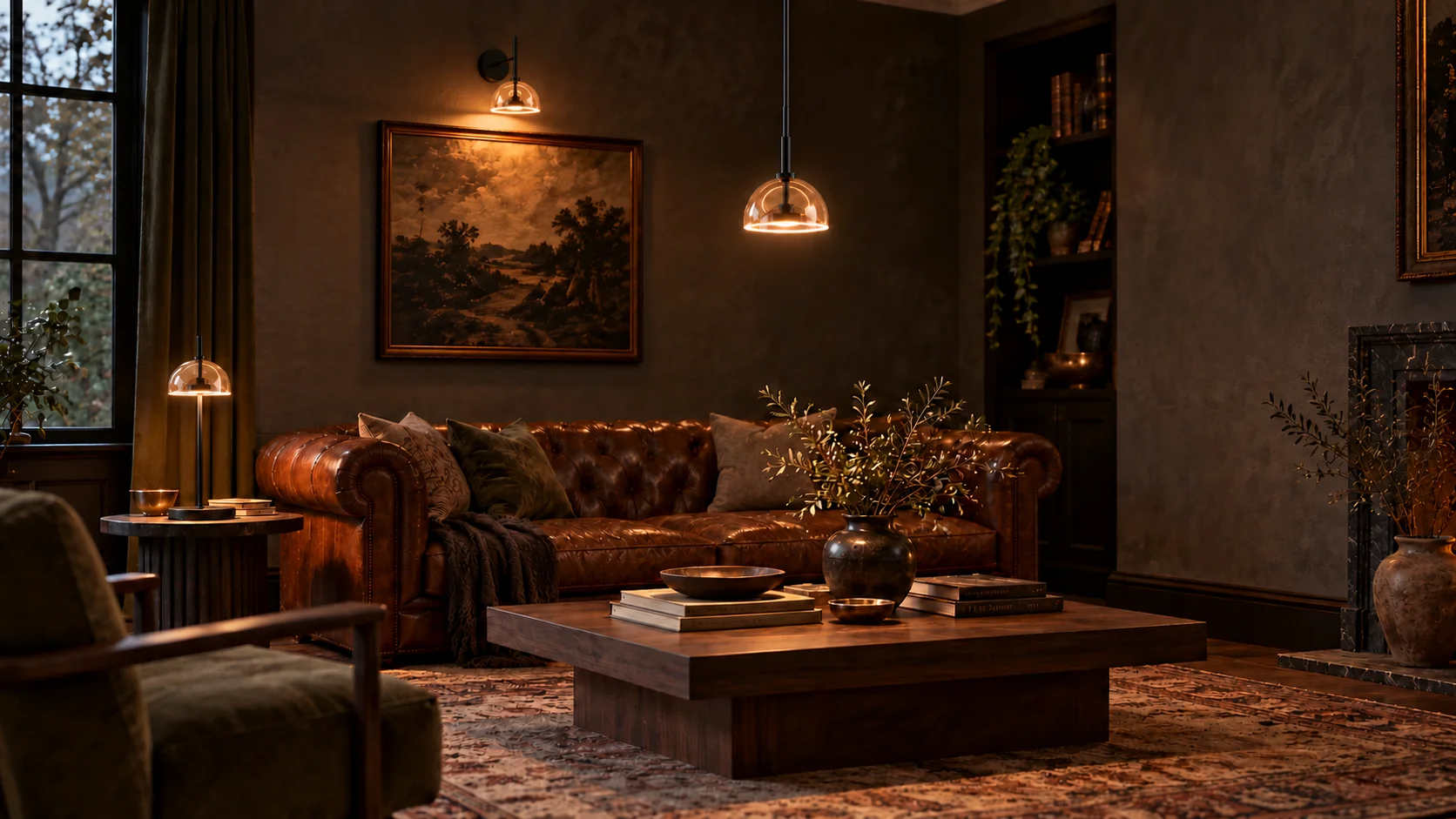
One of the biggest characteristics of Mid-Century Modern interiors is layered lighting.
Instead of depending on a single fixture, the style works best when different lighting elements interact together:
Using lighting at different heights allows the space to feel more dynamic and intentional.
For example, a living room may combine:
Together, they create a more premium and hospitality-inspired atmosphere.
In Mid-Century Modern design, layering is often more important than brightness itself.
That is why the warm layer does the most work: our ambient lighting collection is built around 2200–2700K filament glow — the colour temperature Mid-Century interiors depend on.
Material selection is essential in Mid-Century Modern lighting.
The most suitable materials include:
These materials help create warmth, texture, and a timeless retro-modern feeling.
Among them, the combination of metal and wood remains one of the most iconic Mid-Century Modern design languages.
On the other hand, overly glossy plastic materials can easily reduce the sophistication of the overall interior.
At Hangke, material balance is an important part of product development.
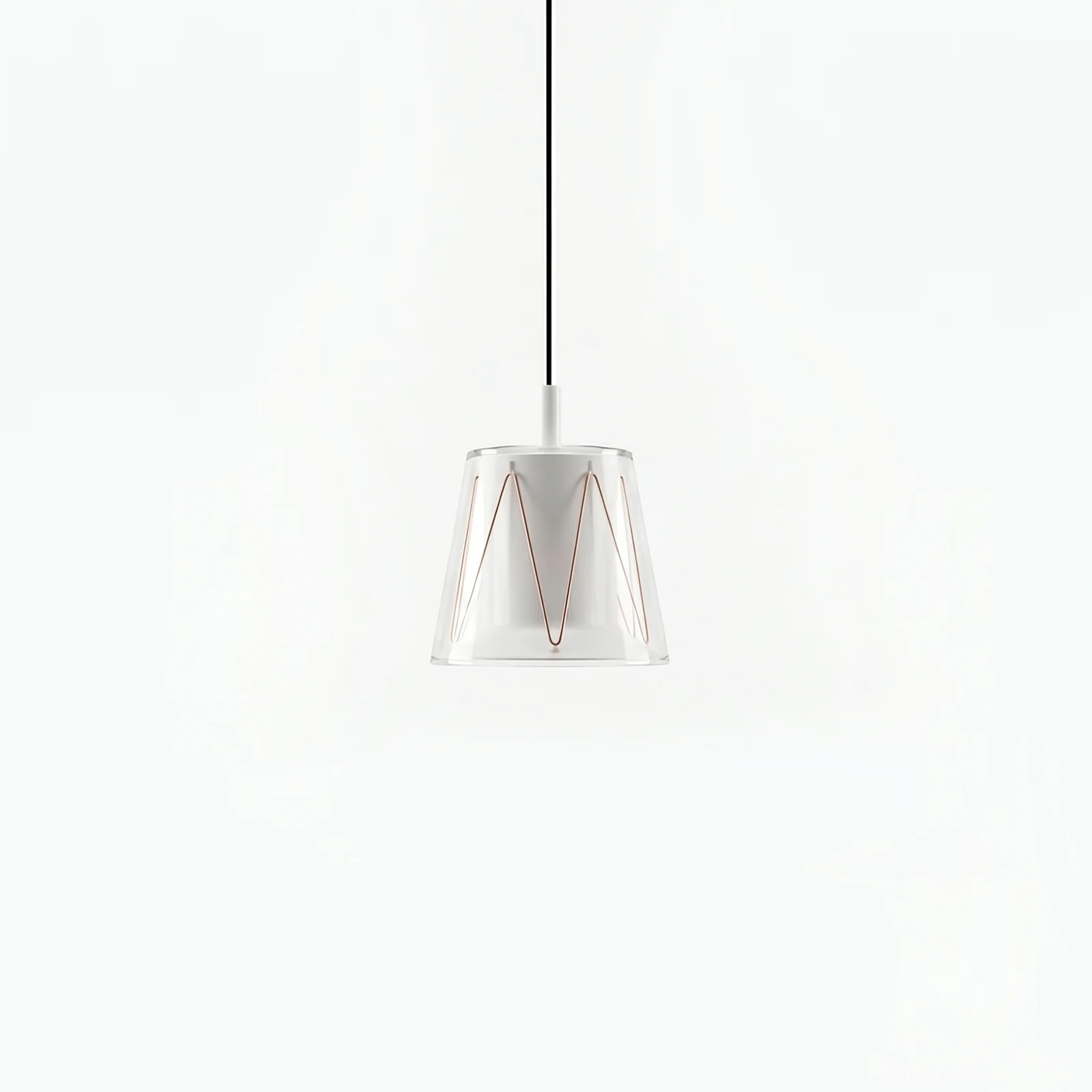
Many lighting collections combine metal structures with acrylic diffusion or warm texture finishes, allowing the products to feel both contemporary and emotionally warm — a key characteristic of modern Mid-Century inspired interiors.
As an OEM/ODM manufacturing partner, Hangke also supports international brands with customized material combinations, finish development, and lighting atmosphere solutions tailored for different markets.
Although Mid-Century Modern lighting feels artistic, the best designs are often structurally simple.
Classic Mid-Century Modern fixtures usually feature:
This architectural clarity gives interiors a sense of order and timelessness.
That is why many Mid-Century lighting icons still look modern decades later.
Hangke’s contemporary decorative lighting designs also follow this principle by emphasizing proportion, clean structural lines, and balanced visual weight.
Especially in open-concept living spaces, hospitality projects, and modern residential interiors, sculptural yet minimal lighting fixtures naturally become visual focal points.
One of the most common mistakes when designing Mid-Century Modern interiors is using overly cold white lighting.
Mid-Century spaces are designed to feel:
For this reason, warm light is always the preferred choice.
The ideal color temperature is usually:
2200K–3000K warm light
Warm lighting enhances:
Compared to cool white LEDs, warm lighting creates a softer and more luxurious atmosphere.
At the same time, more consumers today are looking for dimmable lighting systems that allow them to adjust the ambiance throughout the day.
This is exactly where modern LED technology meets Mid-Century Modern aesthetics.
As a professional LED lighting OEM/ODM manufacturer, Hangke integrates modern LED solutions with timeless design language, helping lighting brands develop products that combine energy efficiency, smart functionality, and emotional atmosphere.
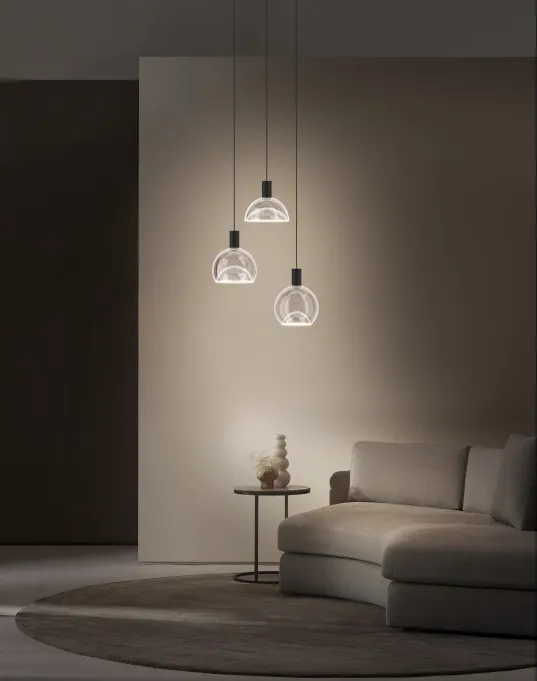
In Mid-Century Modern interiors, lighting should not feel isolated from the environment.
The best spaces achieve harmony between:
For example:
When lighting becomes part of the overall spatial composition, the interior feels more intentional and elevated.
Hangke’s product development philosophy also focuses heavily on environmental integration.
Instead of designing fixtures as standalone products only, Hangke pays close attention to how lighting interacts with architecture, furniture, materials, and atmosphere.
This approach helps global buyers and lighting brands create more cohesive collections for modern consumers.
What makes Mid-Century Modern timeless is not simply its retro appearance.
It represents a deeper lifestyle philosophy:
That is why Mid-Century lighting often feels more like collectible design pieces than ordinary household products.
Lighting shapes not only the brightness of a space, but also its personality.
And today’s consumers are increasingly asking:
These changing expectations are reshaping the lighting industry globally.
For many years, the market focused heavily on ultra-minimal and technology-driven interiors.
Today, however, consumers are rediscovering the value of:
This is why Mid-Century Modern continues to grow as a global interior trend.
For lighting brands, distributors, retailers, and designers, this shift represents more than a temporary aesthetic movement.
It reflects a deeper change in consumer psychology.
People are no longer only buying lighting for functionality.
They are looking for products that create atmosphere, emotional connection, and design identity.
As a leading LED lighting OEM/ODM partner in China, Hangke continues to explore how contemporary LED technology can merge with timeless interior aesthetics.
From material development and structural design to smart lighting solutions and manufacturing support, Hangke works closely with global partners to create lighting products that align with evolving international design trends.
As Mid-Century Modern evolves into a new era, lighting will remain at the center of how people experience warmth, comfort, and sophistication in modern living spaces.
For lighting brands and retailers looking to expand their Mid-Century Modern product lines, Hangke offers OEM/ODM manufacturing across pendants, floor lamps, table lamps, and wall sconces — with customizable CCT (2200K-3000K), material combinations (brass, walnut, acrylic, frosted glass), and finish development tailored to your market. [Contact our team] to discuss your MCM lighting collection.
Mid-Century Modern is one of 2026’s fastest-growing lighting categories across North America and Europe. Hangke helps lighting brands, distributors, and retailers develop MCM collections with OEM/ODM manufacturing across pendants, floor lamps, table lamps, and wall sconces — including customizable CCT (2200K–3000K), materials (brass, walnut, acrylic, frosted glass), and finish development.
Explore our decorative light OEM &ODM manufacturing; contact our team to discuss your MCM lighting collection.
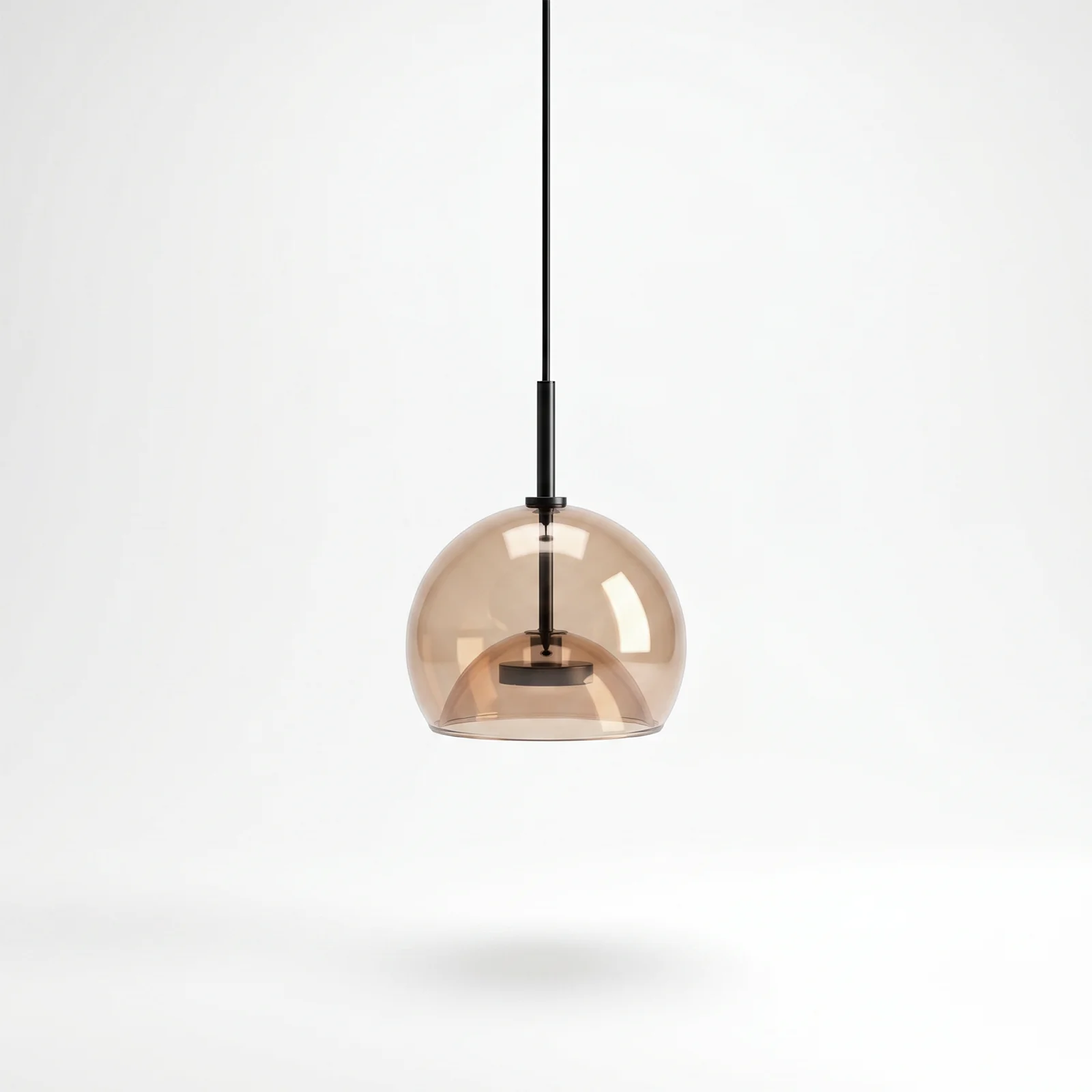
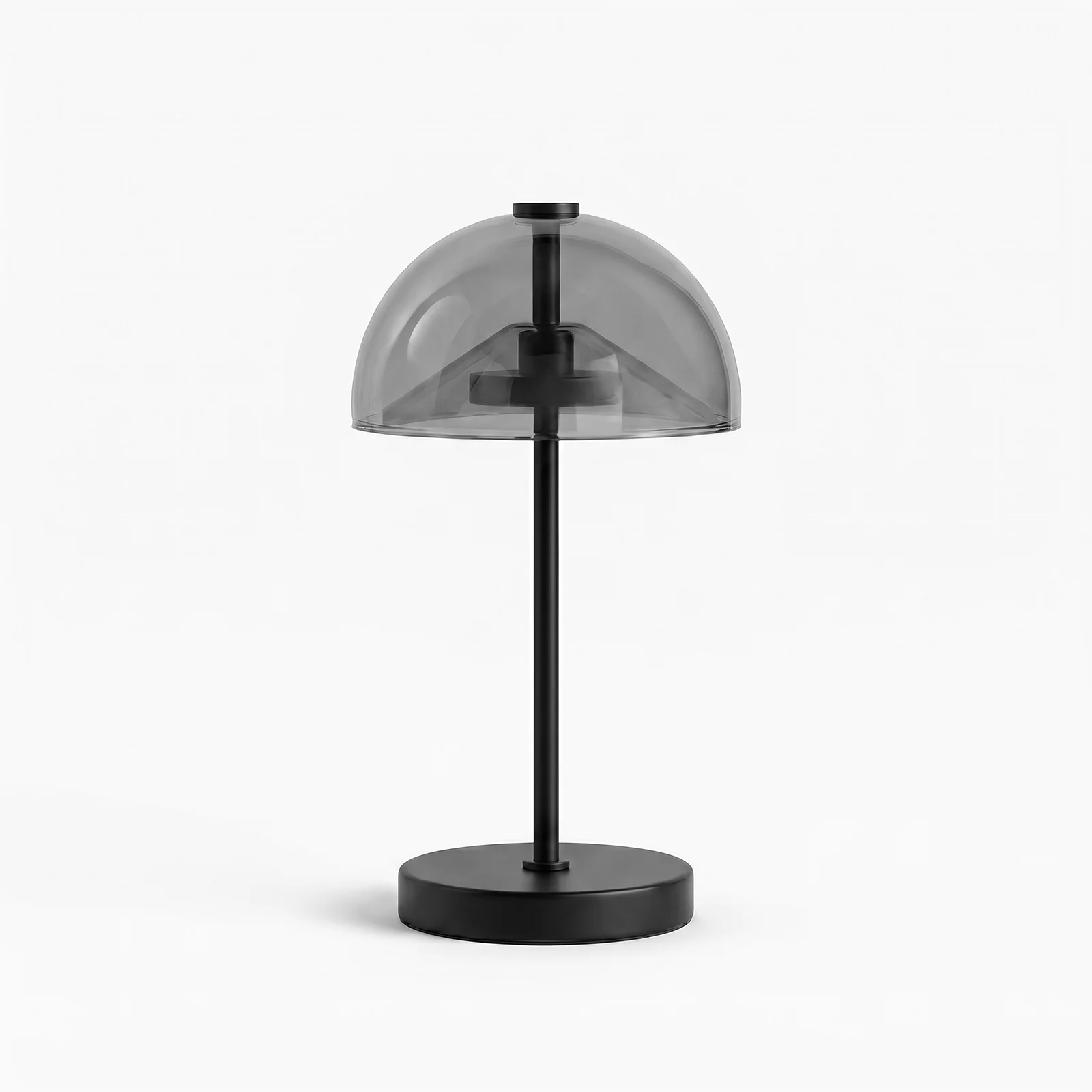
Pendant, wall and portable formats built on the same design language.
Building a mid-century collection? Send your brief to our team.